Our sidebar’s getting awfully crowded…
[Video][Website]
[7.79]
Leonel Manzanares de la Rosa: The reverb-laden-but-also-kind-of-distorted production makes “Byeol” sound like it was made to appease both the Gods of the digital world and the monsters in your bedroom. They seem very pleased.
[8]
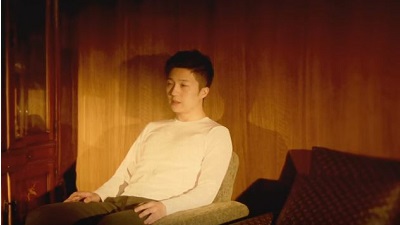
Madeleine Lee: “Byeol” is a whirlwind, full of layers and little sounds and different synth instruments and a low end that chugs; yet at its centre there’s only one person, Jay Song. He’s the creator and producer of the song, and he’s its lone protagonist, standing by the sea in the empty space between childhood and adulthood, looking up at the stars through his tears, realizing what he couldn’t as a kid. “Byeol” is as hazy and gauzy as a sad memory, and as heavy as a memory gets when you realize it’s foundational to who you are.
[10]
Iain Mew: It’s a beautiful feeling when music feels like the external manifestation of your emotional processes. “Byeol” does that for me in a relatively abstract way — I haven’t seen a translation, and what little I know of the song’s subject concerns experiences which aren’t mine to read into — but it does it powerfully nonetheless. Its scuffed calm sounds turned inwards, the kind of fog that comes from trying to dive into your own thought processes. Then over its time it sounds like reaching a positive realisation, minutes spent balanced on the edge of understanding. Flash Flood Darlings handles the build so smoothly, midpoint almost-conclusion and all, that the emergence of the synths that sound like chiming bells fits perfectly, like the point where you identify your own feelings and wonder how it was ever anything less than obvious. I love how the song ends with an energetic electro burst but doesn’t quite resolve completely, like a separation of the internal and external, just a hint of pulling out to focus on the outside world again with a new sense of purpose, senses heightened.
[9]
Anthony Easton: The combination of beats, electronic percussion, and vocalizations — sounding like breath moving faster but controlled enough not to collapse into hyperventilating — is beautifully skilled.
[8]
Alfred Soto: A low key electronic track with mumbled vocals and a sequencer throb, and in that it’s not charmless.
[6]
Crystal Leww: “Byeol” is the part in the night when the DJ decides that he wants to play something to slow it all down for the lovers and the moment in the night where I decide whether or not I want another shot of whiskey or go home. It sounds like it could be interesting for a moment as it builds higher and higher and does not pay off at all, choosing instead to go back to the quieter groove. Then it builds again and then again does not pay off. Time for the next song, y’all.
[4]
Thomas Inskeep: The closest thing I’ve heard to Ulrich Schnauss’s 2003 album A Strangely Isolated Place since Schnauss’s own follow-up. Gorgeous, pulsating, motion.
[8]
Patrick St. Michel: A bit like “Cara Mia” from earlier this week, “Byeol” moves in slow motion, soaking up all the highlights of youth before they slip away. It’s reflective without being stuck in amber, a lovely bit of hazy pop from a young artist to certainly keep an eye on.
[7]
Juana Giaimo: When I was in secondary school, we had the first break at 8:40 AM. Some classmates and I used to go out to the patio and sit with our backs to the school’s wall, on which the sun shone. It was very pleasant how the sun slowly warmed us — and sometimes it wasn’t even strong enough to do so. Sometimes we didn’t even talk. But I wonder how much of it I am inventing — maybe in the last years we preferred to stay inside the almost clastrouphobic classroom. I had mixed feelings about high school, but now that it has finished years ago, I try to leave the negative ones behind. “Byeol” feels like this process: from being distant and slightly vulnerable from all the memories, to finding clearer thoughts by knowing what to highlight fron the past. It also feels like those mornings — especially in the end when energy and light invades the song and everything starts being in motion — the mornings I choose to remember.
[8]
Brad Shoup: I love the bass’s throb: it’s like slightly agitated waves against a seawall. After the three-minute mark they hit the bell and start with the staccato intonations: it’s kind of holy. It’s also reminiscent of physical labor. The end comes before the finished product, but the making-of was great.
[7]
Jonathan Bogart: If there’s such a thing as a pan-Pacific sound of the 21st century, blunted but highly melodic synthpop might as well be it. The overlapping, ever-rising sounds that sweep the song to its conclusion is one of the most beautiful pop moments I’ve experienced this year.
[9]
Edward Okulicz: If the initial mood of “Byeol” feels like looking back and losing your breath, the final one is like being crushed by the weight of your own nostalgia. For building a bell-laced climax that sounds more like a spanner on a metal workbench, I wish it had gone on longer.
[8]
Will Adams: The bassline pumps through the same artery as “Warm Blood,” setting the stage for a piece that ticks all of my boxes: breathy baritone, gated drums, upward chord progression. Unfortunately, as “Byeol” progresses, its sound pools toward the low end of the frequency spectrum; when the bells start chiming, it tips from immersive to a touch overwhelming.
[7]
Josh Winters: It was only a few days ago when I commemorated my 10-year anniversary of being openly queer. One thing they don’t tell you when you come out at a young age is that despite your loved ones embracing you for all that you are (if you’re lucky), some of them may slowly distance themselves away from you, the reason being that they’re dealing with a similar struggle themselves. In my case, time proved this to be true, and as an adolescent, you feel like you can only relate to so many people you know. If you’re an introvert like me, your best option is to seek these voices out yourself: through storylines depicted on TV, through the pages of comic books, through emotions expressed in music. Because of this, coming of age as a young queer was a solitary journey that mainly took place under unseen views after the lights went out. Jay Song went through a similar experience as well, and “Byeol” sounds like it could have only emerged in the dead of night, when you can let your wonder wander freely in the stars twinkling above. I picture him lying on his back on top of a steady high-speed rail looking at all the stardust scattered throughout the sky, watching comets shoot across in slow motion and asteroids cluster into meteor showers, violently hurtling themselves in his direction. But as the action unfolds, Song remains unfazed, his breaths controlled and deliberate, never doubting for a moment he’ll make it back home. In 4.5 minutes, I can feel the past 10 years: wide-eyed innocence and boundless passion coupled with deep melancholy and surging loneliness. Never before have I seen myself reflected like this; it’s like I’ve made contact with someone on a faraway planet. For once, I don’t feel alone.
[10]