Congolese kids ripping it up in France…
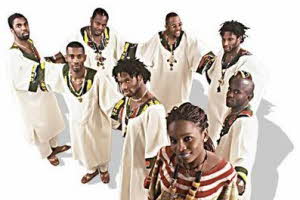
[Video][Myspace]
[6.50]
Tal Rosenberg: A few years ago I visited my friends in Brussels. We spent most of the time blazing spliffs in the back of a van while they mockingly rapped to songs like this one, which were playing constantly. Watching them pantomime and caricature and shift voices to boilerplate French rap songs was hilarious. But in this case I’ll invoke the perpetually misguided and conceited Courtney Taylor-Taylor: “If it’s fun, then it’s good; if it’s bad, then it’s funny.”
[4]
Matt Cibula: Sexy, smooth, spunky, sounds smart. I cannot imagine a better song existing in 2009.
[10]
Chuck Eddy: I’ve long been favorably disposed toward product of the Franco-Afro dance-rap diaspora, though I’m missing several languages that might assist my specifics. So I’ll just say the backing rhythm and female vocals here inititally struck me as too subtle, as often happens with African pop. But after a few listens, the strong melody and rap switchoffs and whoops and chants and hand-claps helped the rest make perfect sense.
[8]
Sophie Green: It seems as though any attack from the vocals is overwhelmed by the high pitched sample and tinny instrumentation. The lyrics and vocal inflections lose their prominence and role as an instrument, and as a result, the song feels quite forgettable. My only point of comparison for French-language rap is TTC, whose more visceral and demanding vocal styles make Bisso Na Bisso feel particularly flat and one-dimensional.
[2]
Anthony Miccio: The shrill synth squiggle makes me flinch every time, but once I acclimated to the drum stutters in the chorus, this gained a summery, atypical bounce — like if Manu Chao commissioned a group to compete with the Black Eyed Peas. Too bad a French cookie monster had to belch onto the track two-thirds of the way in.
[6]
Martin Skidmore: Sunny Congolese rap, with the rapping in a distinctly French style — without the hints of lovely central African guitar pop, kept rather in the background behind the basic hip hop beats, you probably wouldn’t guess where it came from. I like the variety of voices, including one almost Malathiniesque gruff one and a sweet and bright female singer. It’s hard to assess rap without the lyrics, but I enjoyed every part of this.
[8]
Michaelangelo Matos: I like the whining G-funk keyboard, especially since the beat and rhyming are faster than G-funk ever allowed itself to be, and I’m intrigued by it as an example of modern-day Congolese music, something I don’t know nearly enough about (especially as a fan of ’60s-’80s Congopop).
[7]
Alex Ostroff: There’s a tension here between the cheerful chorus and the harder verses, which is probably for the best. The spare martial beat on the verses explodes into jazzy syncopated guitar arpeggios on a dime and fades right back effortlessly. The first version I heard lacks this subtlety on the chorus, and suffers for it. However, it is the only track I know of to quote both Obama (Yes We Can) and KRS-One (Sound of Da Police), which piques my interest in their message. Politics aside, the chorus alone makes this block-party-worthy, and the entrancing shifting guitar textures put it over the top.
[7]