How long until the Destroyer collaboration?
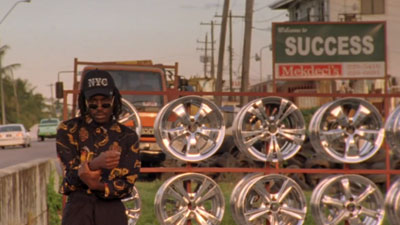
[Video][Website]
[7.17]
Jessica Doyle: There’s this moment that comes after you’ve done something seriously wrong — not small like misplacing your keys, not something you can apologize for easily — and the punishment has come and you’re standing in the aftermath. (This assumes you are privileged enough to be accustomed to fair punishments.) You’re hushed and chastened, with the defensiveness burned off, and now you have to pick up and keep going with your new self-knowledge. You are not as good a person as you thought you were. And in that recognition comes a sort of peace. This song is the musical articulation of that peace.
[9]
Patrick St. Michel: Petition to make Devonté Hynes the head of all bass-guitar production in 2013 starts now. “Chamakay” follows up “Losing You” and “Everything Is Embarrassing” as Hynes-produced (and in “Chamakay”‘s case, performed) tracks featuring really smooth bass work. What makes it great is how non-flashy it sounds on all three songs, allowing the lyrical sadness and other noises to play out, but being assertive enough to give each a bit of a backbone. Plenty goes on during “Chamakay” to indicate Hynes isn’t phoning it in, but that bass (and the ennui) remind that the dude has been developing his own little pop formula over the past year.
[8]
Anthony Easton: That sax riff is ludicrous. I am not sure if that’s a good thing yet.
[6]
Cédric Le Merrer: Between this, Solange’s “Losing You” and Basement Jaxx’s latest single, someone more qualified than me on identity politics and cultural appropriation should probably write something on the flurry of hipster African tourism music videos. “Chamakay” seems to be the more “authentic” one, its beat sounding like a slowed down Mory Kante single, and the whole thing coming wrapped up in Dev Hynes’ own family history, but what strikes me on this song is the stellar production work. It’s not just the usual Hynes as Blood Orange mastery of mood that impress, but also his understanding of his own limitations as a vocalist and his very smart use of the sometime insupportable Caroline Polachek. Alone, his mumbly delivery would have turned this into dull chillwave, while Polachek’s performance could easily have ruined the fragile mood with too much vocal acrobatics. I know it’s a bad look to credit the male producer for the female voalist’s performance, but he’s the one with his name on the marquee, here, so I’ll go ahead and do it anyway. What keeps this from being a 9 or a 10 is the slightly aimless melody. Sometimes, you can’t avoid the Chill Wave.
[8]
Brad Shoup: The inclusion of Caroline Polachek doesn’t do much for the notion of duets. Hynes’ quivering loverman obscures the topspin Polachek applies to her parts; she sounds like Jessie Ware, but Jessie Ware as a trumpet. (For the intro, she does this sustaining wordless thing where she alternates between the fricative and nasal — you can really hear the horn.) As a duet, then, it’s middling, but as camp-softcore atmosphere, it’s great. The snare drips as if from a faucet; the bass muscles in for the occasional quip; the bgvs sink the sun. All good, until the sax solo.
[5]
Jonathan Bogart: Unfocused and invested in atmosphere over hooks as this piece of soft-rock-according-to-memory is, there’s no denying Dev Hynes’ ability with a melody, especially on the chorus. I’d call the saxophone that comes in at the end “healing” if there had been anything in the three minutes preceding it sharp enough to leave a mark.
[7]