The way of the hat or the way of the beard…
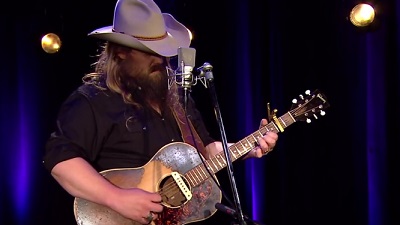
[Video]
[5.77]
Stephen Eisermann: First glance: please don’t be a bad cover of the near-perfect Lee Ann Womack/George Strait duet. Then. Stapleton sings his first note and, “oh fuck,” I immediately think, “please don’t make the aforementioned duet seem less perfect.” Unfortunately, friends, he did just that. Stapleton has a way of wrapping his voice around words and elevating even the most treacly lyrics (“Sometimes I Cry”) into a whole nother atmosphere, and when the song is already perfect… well, there really are no words. I know it’s early in the year, but this is — and will remain — the best country single of 2017.
[10]
Ashley John: In the chorus of “Either Way,” Stapleton’s voice bursts past and silences its only partner, his acoustic guitar, begging for a reprieve from a loveless household. The lyrics are without decoration, concluding hopelessly with a definitive “I won’t love you either way.” Stapleton voice’s grinds up and down, piercing the chorus and then retreating back into low rumblings for the verses. The song is mesmerizing and painful and a daring choice for a summer single. If this song came on the radio during a carefree, sunny drive, I would rather turn it off than chance being sucked into Stapleton’s hollow world.
[7]
Leah Isobel: Stapleton sings that all of his tears have been cried out; the ragged edge to his voice on the high notes suggests there are a few more left. The endlessly circling guitar comes to rest at the end of the song, but there’s no closure, only an ultimatum left hanging in the air. He’s willing himself to move on more than he has, his resentment grown hard and immovable. This is the kind of song that gets pegged as powerful, honest, perhaps even emotionally generous in Stapleton’s willingness to admit failure. But I don’t think he means it — not until she leaves, anyway. He can’t imagine another life yet, too busy walking through the past. I know this feeling.
[7]
Joshua Minsoo Kim: The barebones arrangement is crucial, not only because it separates Stapleton’s version from Lee Ann Womack’s, but because it channels the sort of sedated mentality of someone at their wit’s end. The chorus is painful but we all know it can be comforting; there’s surely some temporary relief when finally coming to terms with the state of a relationship. But that repetitious guitar melody embodies the aftermath: we’re still left sluggish and hurt, having to deal with the dried-up bitterness, confusion, and depression taking residence in our psyche.
[7]
Julian Axelrod: Stapleton’s breakout Traveller established him as the hirsute savior of Adult Country Music — a classicist who writes songs with lots of pedal steel and zero Nelly verses. It’s a boring narrative, but this song’s bleak portrait of a long-dead relationship feels adult in both its trappings and its tone. Stapleton sings the verses like a shrug of a man, so worn down he can barely look you in the eye. The lyrics toe the line between melodrama and real human pain, and the second verse could use a second pass. But that line about paying bills twists the knife in just the right way. It’s wild that we’re still doing acoustic guitar-only arrangements in the Year of Our Lord 2017, but here it pays off. (Lee Ann Womack’s 2008 rendition has a more straightforward arrangement, but it barely sounds like the same song.) I love how Stapleton tears into the chorus, delivering a full-throated roar that hits way harder without Daughtry-esque guitars behind it. His words feel large and lonely, like the bloated, dying elephant in the room. For a song about aimlessness and indecision, it’s strikingly self-assured. Play this for your divorced dad.
[8]
Anthony Easton: Stapleton is obviously skilled, and knows his history. It’s an exquisite simulacrum of ’70s, outlaw heartbreak. Outlaw was a marketing category, and it’s pain had pleasure mixed in. This seems to be a museum piece: well crafted, overwrought, and not very interesting.
[5]
Katherine St Asaph: It’s real; we know this because the accompaniment is a little acoustic wagon and not a Southern-rock muscle truck, a void that Chris Stapleton accounts for by making on the chorus like he’s Sam Smith doing “What’s Up.”
[5]
Micha Cavaseno: You want to know how a guy is starting to believe his own marketing? Give him a chance to record an acoustic, intimate song and let him scream into your fucking ear and make sure that the vocals are mixed in a way that headphone users have to know that, yeah, this guy doesn’t love you, or like you very much, even if you’re streaming his shit, because he wants you to suffer permanent hearing damage for the rest of your life.
[2]
David Sheffieck: I believe the technical term for Stapleton’s singing in the chorus is “a caterwaul,” and it sounds nearly as harmful to his vocal chords as it is to my ears. For both our sakes, I hope he stops soon.
[3]
Will Adams: Really, I was engaged with the quiet torch song approach until he started wailing like his sex was on fire. The refrain feels perfunctory, as if he didn’t think the song could have any power without some big, grand gesture. And making it the centerpiece of the song helps no one.
[5]
Alfred Soto: I don’t want to keep picking on Chris Stapleton, but from the way he sings the acoustic plaint “Either Way,” it’s clear that sounding like a pompous blowhard is his intention — that singing like a pompous blowhard is the means by which he channels soul. To be soulful, Stapleton suggests, requires sounding pompous. This means he must not mind the Michael Bolton comparison. These are the kinds of men whom the female characters in Miranda Lambert’s songs avoid.
[4]
Nortey Dowuona: This brother has soul. (The day Prince died, I saw Chris cover “Nothing Compares 2 U” really well.) And within this gentle, guitar-driven ballad, he slowly builds with a gentle murmur, then explodes with a raspy howl that seems to rip your heart to pieces. He is just covering a song, but he gently cradles it as if it was his own carefully tucked-in child. Someone who finally gets it.
[8]
Thomas Inskeep: You know what Chris Stapleton plus an acoustic guitar gets you? An incredibly boring record.
[4]