I’ve heard there was a secret chord, etc. etc.
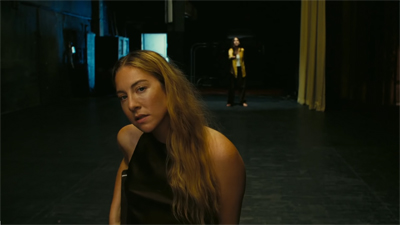
[Video]
[6.75]
Alex Clifton: I fell in love with Simon and Garfunkel when I was eleven years old; I’d sit in my room with my Walkman and my Greatest Hits CD and mouth the words along to “I Am a Rock” as if I too was an embittered alcoholic writer who understood what it meant. I still love Simon and Garfunkel in part because they did a great job of making simple but affecting songs that linger long after they’ve ended. I knew I’d love “Hallelujah” from the opening guitar chords, which are the exact texture of all the old S&G songs I have loved. The entire song is a slow, luxurious build that takes its time, growing in intensity as each sister joins the song. It took me a few listens to realize how the instrumentation gradually becomes bolder because I was so stuck on the vocals, but it never feels maudlin or overdone; if anything, it’s understated, only emphasizing the vocal (and sisterly) bond we’re hearing. The harmonies are gorgeous, sudden intense bright spots like a lantern in the night just when you need it most. It’s a flicker of hope. Although “Hallelujah” deals with grief and makes me reminisce about all those I’ve lost in my past, it also provides a cushion to rest against. Whenever I know I’m sad and falling, I know that this song will catch me. It’s supportive and safe and keeps making me cry. It’s the best song I’ve heard all year.
[10]
Alfred Soto: Shedding the electronic manipulations for a close-miked intimacy, Haim strum basic riffs over a lyric about making do with loss. “Laughin’ together like our thoughts are harmonized,” Este sighs, and she makes her dead friend visible like Ezra Koenig and Danielle often couldn’t when the latter guested on the latest Vampire Weekend album. A change of pace, but I wouldn’t want it normalized.
[7]
Iain Mew: Almost too slight for its own good, the shifts in voice keep it going and when the arrangement opens up and lets all of the light in it was just about worth the set up.
[6]
Tim de Reuse: Notes of survivor’s guilt, hints of the grieving process, a message of thankfulness — but sonically pristine, ending in a sterile mix of strings and wooshing echoes. The manicured production and unambiguously uplifting lyrical content portrays a simple, corporatized version of grief and recovery, with all the ugly parts power-sanded away. This is not to say that I doubt the sincerity of the songwriter (I’m cynical, but not that cynical!); the emotions are real, intense, and complex, I’m sure, but this particular delivery mechanism does lend itself to communicating very much at all.
[4]
Thomas Inskeep: Musically, this sounds just like Dan Fogelberg’s “Leader of the Band” without the horns. And whatever the Haim sisters may be saying, lyrically, I can’t get past the fact that this sounds just like “Leader of the Band” without the horns.
[2]
Nortey Dowuona: A stinging guitar leads in Danielle Haim’s heavy voice, with the lilting tones of her sisters following and swelling as they turn and swing, as more guitars shimmer down and widen the mix with strings pulling up more curtains back and the three sisters slowly placing the screen in place as they step through into the cinema, then sit down in the third row.
[8]
Vikram Joseph: Someone once told me that post-rock was the easiest genre to do, and the hardest to do well. I’d argue that stripped-down, sincere acoustic ballads fit that aphorism even better. They rest entirely on the songwriting — nowhere to hide — but the ones that are well-written enough to cut through all the schmaltz and mediocrity tend to become iconic: “I Will Follow You Into The Dark”, “First Day Of My Life”, “With Arms Outstretched”, you know the kind. Add Haim’s “Hallelujah” to that list, because it’s pristine, timeless and heartbreaking. In its plainspoken depiction of friendship, sisterhood and unfathomable grief, they manage to capture both the profundity and brutal transience of experience, of the things that happen to us and the things that drift past us just out of reach. The sisters take a verse each, and it feels like three people who know each other intimately piecing together old memories. “Laughing together like our thoughts are harmonised / been that way since ’95” is simple, but desperately poignant. The chorus (“why me, how’d I get this Hallelujah?”) is a wry shrug, a realisation that the dense cornucopia of your experiences — the sadness, the elation, and the things in between that are far, far more complicated — is unique to you, and you alone, and fuck isn’t that overwhelming?
[9]
Kayla Beardslee: Gorgeous in its simplicity and emotional honesty: Haim is better now than they’ve ever been. Like “Summer Girl” and “Now I’m In It,” the lyrics are powerful in their directness, especially the intertwined disbelief and gratitude in the hook of “How’d I get this hallelujah?” In a rare but great moment, all three sisters also get the chance to sing their own confessional verses. Their voices combine in vibrant, supportive harmonies, and what they have to say — about family, about grief, about healing — feels more important than ever.
[8]