Do we love mess? Somewhat!
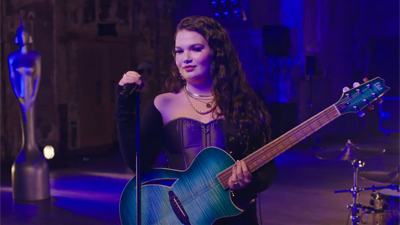
Claire Davidson: With Olivia Rodrigo between album cycles, it’s nice to have a fraught relationship song with some actual spunk back in the zeitgeist. Lola Young has just the presence to illustrate this dynamic, too, her sullen alto giving voice to disdain before exploding with an anger that suggests her lyrics could’ve been pulled verbatim from a particularly charged argument. What I really appreciate about “Messy,” though, is the song’s willingness to illustrate the truth that its narrator is, well, a mess: she’s impatient, she doesn’t have a handle on her substance use, and she flies off the handle more times than she can count. Yet what angers her about her partner isn’t so much their complaints about this, but their use of her behavior as a measuring stick for their own well-being, when they’re clearly just as dysfunctional as she is — and likely far more inconsiderate, at that. (Not to mention sexist, as evinced by the line, “You hate it when I cry unless it’s that time of the month.”) This is a song whose catharsis lies how sharply Young reveals that contradiction, and I, for one, look forward to the many days I’ll inevitably spend belting to this song when it comes on the radio.
[8]
Will Adams: A study of contradictions: a song titled “Messy” with an arrangement of squeaky clean mid-tempo soft rock in the vein of “So Hot You’re Hurting My Feelings” or “Good Luck Babe!”; a narrator who blasts her shitty partner but is also flawed; a song that pushes five minutes but only sporadically hits the sadness it’s going for, via the chorus’ kicker of, “A thousand people I could be for you / And you hate the fucking lot.”
[6]
Ian Mathers: The emotions are impeccably expressed, but is everyone going to hate me if I say the music could stand to be a little more, err, messy?
[6]
Mark Sinker: Form follows function? Not quite, because there’s no mess in the delivery (maybe there should be) but still there’s mess all over this. Not unreliable narrator but instead unreliable judge — of how the narrative will be landing. The same observer-disquiet you feel during any given episode of Pretty Little Liars — like “don’t do that! also don’t say that! You did this to yourself!” It’s good to clock this well done, and grim as well.
[9]
Andrew Karpan: Serving realness, at hourly rates.
[6]
Jel Bugle: I zoned out completely listening to this. I don’t like being mean, though, and I hope someone finds something they like in this repetitive song! Must be something in the words?
[2]
Nortey Dowuona: Solomonophonic, Manuka, Monsune and Carter Lang all handle a little bit of this song. Solomonophonic handles the electric guitar and bass, Manuka handles the drums, keyboards and synthesizers, Carter handles the percussion, keyboards, electric guitar and synthesizers, Monsune handles the keyboards. Co-writer Conor Dickinson also handles the acoustic bass and guitar. The song, for all their patient touches, is surprisingly minimal. The drums are simple but bouncy, quietly trickling below without drawing any attention to themselves, the percussion gurgling in and out then bubbling forward, the keyboards soft and tender, but restrained, held back as well. The acoustic guitar and bass rake quickly across the mix to add flash and texture, but aren’t allowed to take control. Even the synthesizers, which you’d think would be the most powerful core of the song, glitter in the chorus and bridge and post chorus, but never make any specific claim to your attention, while even the electric guitar cannot seize your attention, despite getting its requisite solo. It’s the bass alone that is the most explicitly powerful part of the song, slinking slowly over the drums and percussion, pretending to not draw attention to itself, but slowly emerging from the wan miasma of brighter instrumental pieces to gently support the bright, lively voice of Lola, but drawing your attention back to it as she vamps in the post chorus, refusing to be shoved out of the spotlight despite the growing crowding it faces from the guitar, drums and Lola’s voice, holding the core of the song together and only loosening its grip on the outro. Solomonophonic, as lead producer on the credits, seems to love working in this lane, and has been slowly entering the public consciousness with this work. Lola sounds great, too.
[10]
Jackie Powell: It’s refreshing that a song so British in its vocal tone and lyrics has become a hit in the United States. Lola Young is one of those rare artists from the United Kingdom whose accent transposes into her singing voice. Also, I’m sure some Americans are initially confused by the way Young uses the word “lot” as a noun rather than an adverb or pronoun. She uses “hate the fucking lot” eleven times to address the frustration caused by the misanthropes around her. Globalization at its finest! Anyway, “Messy,” a song that Young has referred to as her “ADHD anthem,” is written earnestly and with a melody in its hook that’s made for festival sing-alongs. While Young’s cockney speaking voice is at times difficult to understand, her singing voice is not. She enunciates clearly and that’s part of why the song has caught on. While Young has created a musical version of the infamous Barbie speech, “Messy” is without the melodic angst that exists so blatantly in Young’s lyrics. “You hate it when I cry unless it’s that time of the month” is one of the song’s great lines, but it’s delivered so matter of factly. It’s ironic how chill and groovy the bass line and the rhythm guitar sound when Young is singing about people who are infuriating.
[7]
Julian Axelrod: Everybody wants to be Amy Winehouse, but only Lola Young is brave enough to carry on the grand tradition of Lily Allen: a lyrically brash Brit with a streamlined sound projecting a provocative but not dangerous image that’s frank without trying to sound like Frank. The arrangement goes down smooth, but there’s just enough dirt in her voice and mess in the margins to achieve a bristly dissonance.
[7]
Alfred Soto: The chorus’ plainspoken vulgar singsong complements the self-deceptions: rather than sounding put-upon, she sounds practiced, a pro at the art of recrimination.
[7]
Iain Mew: The first verse has some tension as to what might happen, between her admissions and demands. Then the chorus frames such a perfectly unfair bind that it overshoots sympathy into total certainty, rendering the song as narratively inert as its slow crawl is musically. By the end it feels like it’s missing a comment section telling her that she isn’t overreacting.
[3]
Taylor Alatorre: There’s something a bit self-flattering in the choice of “Messy” as the topline term of abuse, especially for a would-be public figure; the Britney nod is as much aspirational as it is slanderous. But the choice to let the song go on a minute longer than it had to is actually a point in its favor, as it mitigates the suspicions that this is all just cynical brand-building. In its repetitions, and in its tastefully dissipating instrumental, the song loses its narrative specifics and instead becomes a beacon for a simmering and vaguely shaped discontent. Still marketable, yes, but with a more agreeable alibi behind it.
[6]
Melody Esme: A nice “Boys of Summer”-y guitar solo, some shimmery background synths, and a song that comes close to meeting them at their levels.
[6]
Katherine St. Asaph: I’m a bitch, I’m a lover, I’m a child, I’m a mother, I’m a sinner, I’m a saint, I do not feel ashamed. I’m Lily Allen, Phoebe Bridgers, and everything between. Would you want it any other way?
[5]
Leah Isobel: Sure, whatever.
[5]