The recent French #1 single, not the typeface…
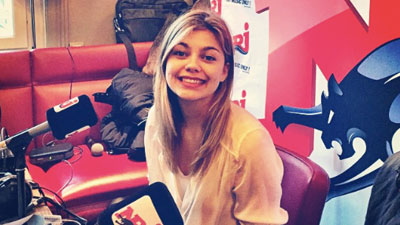
[Video][Website]
[5.83]
Iain Mew: Louane reached success through the long route of The Voice and a film where she played a character entering a singing contest. That makes it more of a pleasant surprise that “Avenir” flows so effortlessly, barely leaving a mark in its wake.
[7]
Edward Okulicz: I really appreciate the way the beat is mixed up throughout various parts of the song — drum hits and clicks or claps chasing each other around the rhythm track. And Louane’s vocal is fine. But that piano just has a numbing effect; its one good trick is the slow-down at the end.
[6]
Alfred Soto: At first it comes off like a ye-ye cover of “Crazy in Love,” and the vocal’s soporific poise a good decision, but it drags.
[4]
Will Adams: I rail against that whole sub-genre of quasi-country deep house, but I must say I prefer that rendering of “Avenir” in its radio remix. There, the bumped-up tempo tempers the original’s natural sluggishness, and its leaden piano line gets somewhat buried.
[3]
Jessica Doyle: It didn’t work for me on first listen: too petulant to be triumphant. The radio edit speeds things up, turning her “J’espère que tu vas souffrir” into more of a playground chant: the content, her inability to strike back properly at the lover who not only abandoned but negated her, becomes less important than the energy of the chanting, and then she’s propelled properly forward.
[6]
Danilo Bortoli: This song comes at a an interesting time for me. I’m currently struggling with French, a language that is ultimately tricky for the non-initiated but also inherently beautiful. “Avenir”, at least for me, benefits a bit from this rare, seductive kind of unknownness that comes from the unexpected and unexplored. It comes off as a revenge song, a goodbye anthem, but its greatness is not located in anger. Its angelic mood and pudency, set by Louane’s singing, are the two things that make “Avenir” sound a lot like a victory lap for Louane. Not a complete one, though: there is a lot of pain to be heard in those spontaneous whoas and rather sharp verses. There’s a sense of relief, too, though, the relief you get out of learning that the unexpected is at least a bit more reassuring than it was before. The relief that can be felt when you’re sure tomorrow is going to come no matter what happens. In Louane’s case, she means it literally.
[9]