Lupe Fiasco is topical, freakoutery does not ensue…
[Video][Website]
[6.44]
Andy Hutchins: Taking one of the best sample flips in the history of rap and flipping it less interestingly — the sax isn’t as bright, the drums aren’t as clean, and the hook gets ruined by Lupe rapping over it — is an affront on a personal level, but beginning a “politically conscious” song with a reference to a fucking Nick Kristof column is pathetic, even if Lu does go on to say some things. When they reminisce over Lu, my God, they will wonder where it all went wrong.
[4]
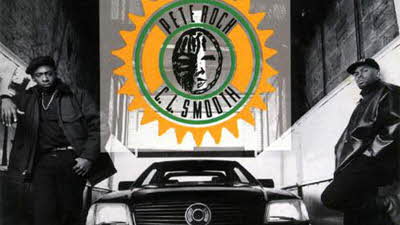
Jonathan Bradley: Rap was built on sacrilege, so word to Lupe for swiping that “T.R.O.Y.” break. The throwback vibe suits him — see, for instance, the Native Tongues–esque “Paris, Tokyo” — and, as an even better tribute to his rap forefathers, he allows his ideas to proceed naturally from his words rather than the other way round. Indeed, that’s what makes “Around My Way” so engaging; Fiasco details his issues with America in a series of snapshots rather than bundling together a rickety thesis statement. The section in verse two where he negotiates the philosophies of various black civil rights leaders is particularly thoughtful.
[6]
Alfred Soto: Closer to the Black Eyed Peas’ “Where is the Love” than “What’s Going On,” this pop manifesto owns up to preferring the truth over methods – a violation of the rules of the hustle, according to Lupe – even if the truth means accepting a second-rate chorus for the sake of selling his ambivalence.
[6]
Jer Fairall: Cataloguing social ills overtop a searching horn sample and a classic hip hop drum loop >>>> shouting generic stadium-ready platitudes over a lazy Modest Mouse sample. I hope, but don’t expect, the charts will agree.
[8]
Jonathan Bogart: I don’t at all mind that he uses the platform his pop hits give him to preach about the ongoing injustice, inequality, and slow genocides in America today. What I mind is that he’s disingenuous about it. Come on, Lupe, you contain multitudes, just own up to it.
[7]
Edward Okulicz: Lupe’s no stranger to social consciousness, but I’m still finding it jarring that he sounds so bubbly and enthusiastic on this example. I guess the brashness suits the crisp drums more than the message. The message itself is a mixed bag at a lyrical level — “set list/breakfast/death wish/necklace” is a bracing barrage of rhymes, the Simpsons reference is a WTF moment in a bad way, and the dots Lupe’s throwing out are all interesting in the ear but he hasn’t connected them. The overall effect is that it feels like a bit of an unfinished lyrical con job, and if I dug deep into their meaning I wouldn’t be surprised to find out that they are.
[6]
Brad Shoup: Some details are great, others read like a catalog of triggers. Jumping on the Tom Scott train could imply piggybacking or partial détournement, but what kind of weight does “T.R.O.Y.” hold in 2012? Change and hits — neither tends to happen by shortcuts.
[5]
Anthony Easton: Fiasco’s work is so packed, so tight, so brilliant about the implications of political strategy–and i appreciate who he mentions (esp. Baldwin), but as this history becomes news, it reminds me that in American culture I hear so little about Indigenous work, and how completely snarled the history of those genocides are–how in the American west, those histories continues in ways that seem outside of memory. It’s the founding of Kansas, but also what is happening in the Dakotas, and child poverty, and addiction, and exhaustion, and people convinced that a shitty deal is better than nothing, though they have signed shitty deals for 200 years and never had any of those that were held up. It becomes one narrative, of gaps, and the unrestorable.
[10]
Alex Ostroff: Six or seven years ago, it felt like Lupe, Rhymefest and Kanye had emerged from Chicago to teach us all how to walk the line between “conscious’ rap” and the more radio-friendly side of things, avoiding coming off as didactic by grounding their politics in nuance and the personal. Kanye’s spent the years since growing fascinatingly self-obsessed, Rhymefest’s mostly disappeared, and Lupe’s grown progressively disillusioned with the potential for that third way. (The ridiculous “saviour of rap” pressure probably didn’t help.) Unfortunately, his music is at its best when threading that needle, and the more Lupe views “pop” and “politics” as separate beasts, the less enjoyable both his pop and his politics are. “Around My Way” isn’t as effortless or comfortable as “Kick, Push” or “Paris, Tokyo,” but its detailed politics and intricately constructed lines remind me of old mixtape cuts “Conflict Diamonds” and “Jesus Walks (Ahk-a-Fella Mix)“. If nothing else, Fiasco hasn’t lost his nimble tongue and passionate mind, and he can still write a decent hook. If he can stop feeling guilty, we might even get another quality pop song from him one day.
[6]