Who’s going to be the reader who brings the CONTROVERSY? Why, Tomás, and this IDM song named after the cyberbullying scene…
[Video][Website]
[6.20]
Tomás Gauna: This song, and Garden of Delete in general, feels like something I’ve never seen/heard before. The music is IDM-meets-PC Music-meets-noise-meets-industrial metal-meets-synthpop — and as weird as it is, it actually sounds good. And loud. There is also its main theme: being a teenager. Which is hard, by the way — your body starts to change, you’re getting acne, your mood starts to change (represented here by the quick changes in the direction of the track), you (really) fall in love for the first time, and everything feels annoying. I don’t think there’s enough music about that, let alone experimental music, and that’s why I feel a connection with Daniel Lopatin and what he’s doing. Also, I kinda need to hear that song he made for queen Katy B.
[10]
Phil Ginley: 2015 was the year that artistic context was crucial when talking about subsets of electronic music. Is PC Music eccentrically produced electropop or a groan-inducing thesis about bubblegum pop being a tool for The Man®? Is Future Brown’s debut a fun mixtape of trap rap and dancehall bangers or a confusing commentary on appropriation in mainstream EDM circles? Somewhere in this discourse lies Daniel Lopatin: one of the figures who helped popularize Vaporwave aka THE most head-scratching fusion of electronic production and second-rate artistic statements. So when he started abandoning dystopian VHS nightmares to repurpose late 90s/early 00s alt-metal on his new record, I was intrigued. “Sticky Drama,” however, is one of OPN’s most disorienting works — which is usually when I adore him most, but this just feels like a stitched-together union of the styles of SOPHIE and Igorrr. And what happens when you pile absurdity on top of even more absurdity? Well, you get this.
[6]
Megan Harrington: It’s not pop. It’s not pop in a commercial’s clothing. It’s not pop with a maximalist supercut. It’s not pop doused with scathing sarcasm. So much of what was praised this year was pop that allowed listeners to leave their tasteful elitism intact but experience the base, sensory pleasures of candied chord progressions. Lopatin’s done that; it sucked. What I like about “Sticky Drama,” why I’m recommending it with my score, is that it sounds like having your body coated with electrocution. It sounds abject and terrifying. When I listen to “Sticky Drama” I can feel my own internal tangle of consciousness and physical wear leave my body and build in the song. I’m limper and limper, a thoughtless echo, and “Sticky Drama” is a writhing husk covered with mosquitos.
[9]
Micha Cavaseno: I’m not sure Dan Lopatin reaching for Richard D. James and Mike Oldfield needed to be buoyed with Aaron Funk-style noise walls and seapunk-styled vocal snatches of earnestness. It’s all part of some high-concept reflection on the Internet that I’ll nod along to in text descriptions and interpretations to which I’ll mutter “true”, but as a standalone record “interesting” only works so well.
[5]
Alfred Soto: The faster gothic bits sound like rescued Nine Inch Nails that have been Skrillexed into submission. The piano and guitar bits glisten like objects of beauty forgotten by someone who wants to forget them.
[5]
Anthony Easton: Is that a gamelan, or some kind of marimba? Whatever it is, the first bit of this might be my favourite instrumentation of the year. How it is scraped and ground into abstraction is also interesting. Extra point for having a gong.
[8]
Leonel Manzanares de la Rosa: Pitched-up, distorted vocal hooks, a broad palette of unsettling synth sounds (oh, those glorious pads), and a delivery so violent it may have come from Aaron Funk‘s nightmares. This is, indeed, the closest we can get to a pop song straight from the mind of a mad scientist. That madman in question, though, is Daniel Lopatin.
[8]
Austin Brown: I was a big fan of Daniel Lopatin’s ambient excursions in Replica, but I lost interest shortly after that, so initial word of this record, ostensibly influenced by a fake “hypergrunge” band and science fiction, had me skeptical. But this is faux-symphonic (structurally, not sonically) electronic pop at its best, mostly because Lopatin knows he’s just as smart as he is full of shit. Little catchy jazz riffs punctuate a nightmare-realm soundscape, making it feel less like actual death and more like a haunted house. He even tries to sing, although if the lyrics sheet is to be believed (which isn’t guaranteed) it might just be his phone number. What more can we ask from our intellectual techno wunderkinds?
[8]
Ryo Miyauchi: I wish I hadn’t read the lyrics because the last thing I would want to read is an excerpt from a teen dude’s first wet dream. The song is supposed to be carnal and perverted, I know, but puberty isn’t something I like to be reminded about over and over again.
[5]
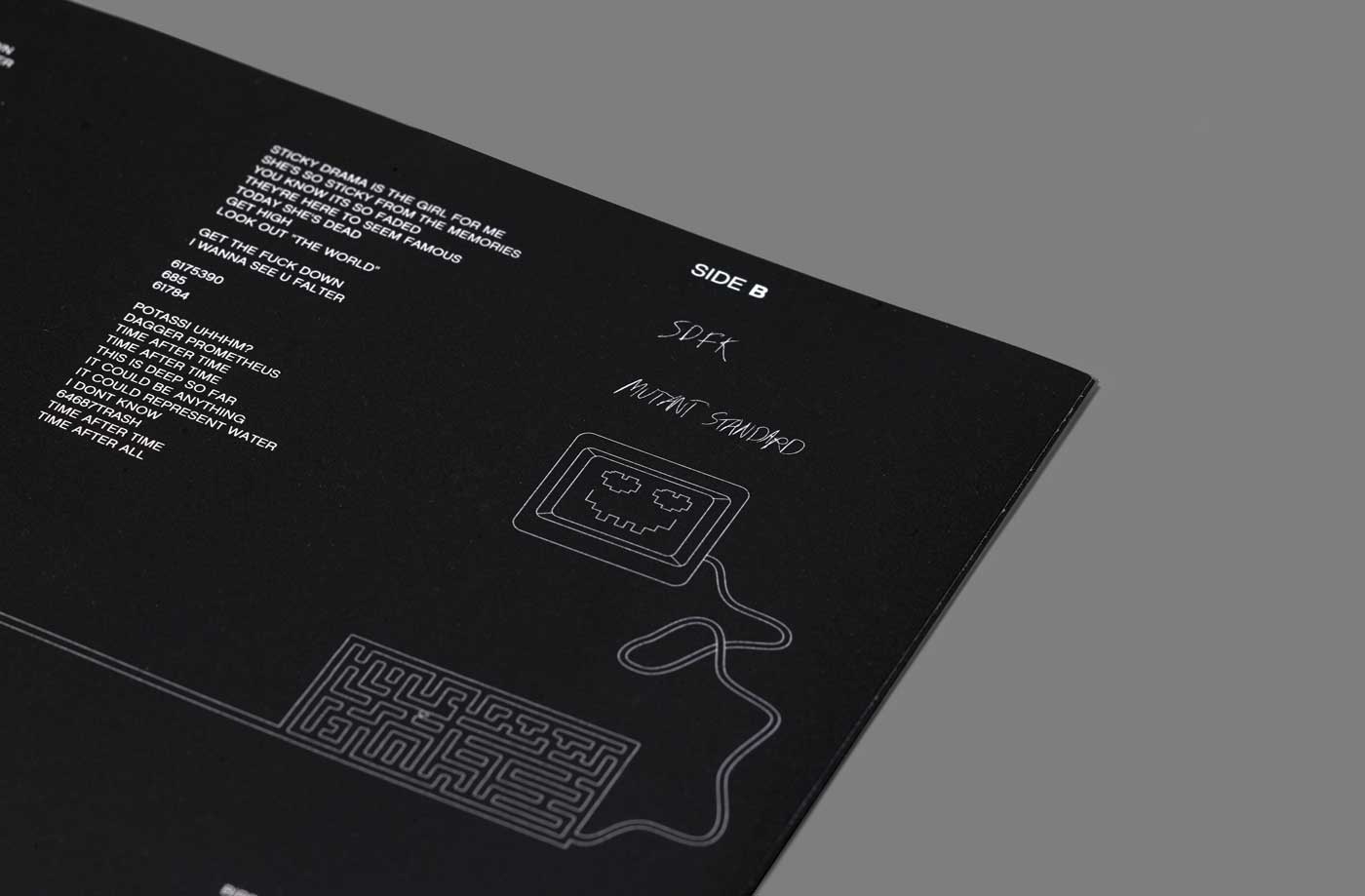
Katherine St Asaph: How to start this listener with an immense goodwill deficit: name your track after a proto-revenge porn site. How to consign that goodwill to the black hole in the center of the Milky Way: pair it with a masturbation fantasy about girls who “can barely stand up,” a tale told in semen and phone numbers. (Thankfully, the actual numbers lead to public works and such, which suggests knowledge that there is a line, if not knowledge about where to place it.) Before anyone comes in and #actuallys me I know the point was to be gruesome: job crushed, bro. The job of being original or singular or necessary enough to justify itself: not quite.
[1]
Joshua Kim: That there are official lyrics and an actual cohesive theme to this song is amusing but ultimately secondary to what’s going on musically. As with everything Lopatin does, it’s never about the conceit or concept itself but how they became a road map for utilizing certain materials to construct something new (most of which is still pretty darn accessible too). There are touchstones, of course — Garden of Delete compounds a lot of ideas from previous albums while adding his love for cyber metal, among other things — but it’s safe to say that there isn’t anyone quite like Lopatin right now, especially considering how much he’s changed his style in the past five years. I don’t particularly love GoD, but “Sticky Drama” is as enthralling and emotional as some of his best work. The different movements don’t always connect too elegantly but it all feels fully fleshed out and thoughtful. The mid-song breakdown with the double bass drum and cyber growling is hilariously nerdy, and it’s the perfect contrast to the pretty MIDI-minimalism and melodic “female” vocals.
[8]
Mike Mathews: The en vogue pitched-up vocal distortion and aggressive rapid-fire synths are definitely for someone. I am not the one.
[0]
Kenny Komala: Some questions are best left rhetorical. “What is love?” is one of them. “What’s wrong with the world?” is another example. So, next time someone asks you that question, if you’re brave or foolish enough to answer it, you should just play that section in the song where it all breaks down to that venomous catastrophic growl. He’ll get the picture.
[7]
Conor McCarthy: Digital death metal is a great idea.
[9]
Thomas Inskeep: Frightening aurally in the same way Aphex Twin’s “Come to Daddy” video is frightening visually, this starts out kinda-sorta pretty (the piano sounding a bit Eddie Van Halen’s opening on “Right Now”) before getting a lot darker, quickly. The vocals are heavily fucked with and processed — literal ghosts in the machine, if you will — and then, two minutes in, the drums start to sound like something off an early-’90s Ministry record, and the tension builds. In the song’s last minute-plus, OPN abandons all hope and goes headlong into the industrial abyss. Old-school Skinny Puppy fans should love this.
[7]
Scott Ramage: Intelligent Dance Music has a get-out clause in the name: if it isn’t for you, you simply aren’t intelligent enough. OPN’s music feels like a legacy of late ’90s IDM, and “Sticky Drama” makes me feel a bit stupid — but in a good way. The sounds are incredible, almost impossible to imagine as the result of design but so precise that they absolutely must be. Every element feels unpredictable, from the trance synths to the metal vocals to the harpsichord melody. I cannot get to grips with this at all, but it’s causing me all kinds of fun, trying to penetrate its angles with foolish glee.
[7]
Crystal Leww: I have a very hard time believing that IDM is anything other than an elaborate ruse designed to make people who hate dancing feel better about not dancing on a dance floor. The fact that Lopatin claims that he “understands the tropes and guises of EDM” or that critics have flocked to Garden of Delete as some sort of more highly evolved form of big and dumb EDM is infuriating. There’s been a lot of talk of poptimism and rockism, and much of that conversation involves the agency of young women like Britney Spears as pop stars, but somehow our conversations have not evolved to include talk about the young women who fill big rooms and clubs to hear Skrillex or Avicii. “Sticky Drama” is supposedly the antidote, but so much of this sound presumes to know, presumes to subvert, presumes to rise above. Instead, what I hear is a whole lot of loud-ass obnoxious noise.
[1]
Patrick St. Michel: Anger — like, real anger, the sort that makes you just break shit for no real reason rather than Tweet — is unpredictable and messy. When your a teenager, it’s always there, just lurking around, ready to spill out at anytime. I used to think I was “better” than angry music — nu-metal mostly, junior high criss-crossing perfectly with Korn and Limp Bizkit — but in reality I was trying to hide my vulnerabilities, the same every other puberty-striken boy was going through. If they could see me shouting at the radio when “Crawling” came on, they’d know I had been full of it. “Sticky Drama,” with its barbed-wire synths and mutated vocals, is a mess, one whose melted vocals tease sadness before just screaming into the wild, not worried about who hears. None of it necessarily connects together cleanly or makes sense, making it one of the best representations of teenage anger I’ve heard.
[9]
Brad Shoup: There is probably an enervating record kicking around Bandcamp right now, something that sketches the woozy cycle of freedom and shame that comes from being young, speeding high on the internet. Something that doesn’t flinch at an honest-to-goodness specter. “Sticky Drama” centers the squelchy pipsqueak reverie of the singer, with its (his? his) wellhole view of internet fame and anon IRC outlook on sexuality. The vocal processing — which puts a shrinkray on Roger Troutman, and suggests a weird new place for the R&B rinsers of just a couple years past — is maybe supposed to be swallowed by the industrial chaos of the midsection, but he’s none the worse for wear, and the brutality is paired well with the New Age piano that led us off. He can call it personal, but he ended up with an IMAX tribute to Nicole 12.
[4]
Peter Ryan: I didn’t have anything to say about this until it came on the college station I was listening to while commuting home through a light blizzard this week. This is for driving a 20-year-old station wagon through a winter hellscape where every exit you pass is a new level and every curve you don’t spin out is a boss defeated. And then everything syncs up just right and 4:30 happens just as you’re pulling off the freeway (you forget that city driving is actually more dangerous in this weather). And then “Belly of the Beat” comes on to take you home.
[7]