Slightly more contentiously, here’s some Canadian post-punk…
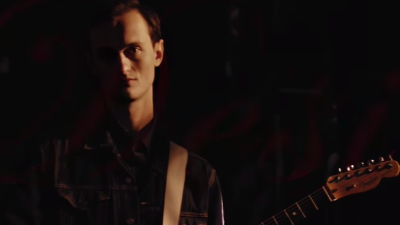
[Video][Website]
[6.29]
Tim de Reuse: Isn’t it convenient to tell yourself, at the tail end of a failing relationship, that it was doomed from the outset? The first half of this song repeats the sentiment over and over: I could taste it, I could feel it, I knew it from the beginning in so many ways. 20/20 hindsight makes it so easy to get bitter and beat yourself up over unknowables, and that’s certainly the direction this song would’ve gone if I’d tried to write it; I mean, it writes itself, doesn’t it? I overthink so much I’d have trouble not writing it in my sleep! I’d never have thought to get a feathery choir to call out from the distance and release the pressure; I’d never have thought to make a breakup song that focuses not in grief or in celebration or in revenge but in placid self-reflection. Tim Darcy’s trademark wail is full of nervous energy, but the impeccably clean production and the simplicity of the composition imbue it with a certain levelheadedness (after all, what could be more pleasantly neutral than an endless I – IV – I?). The message is matter-of-fact in the end, despite the singer’s grandiosity: “Desire, desire / It was never gonna stay.” Nothing bitter, no self-pity, nothing to grieve, no should’ves or could’ves, no plot twist — just an acknowledgement, floating on clean air. Someday I hope that all my exits might be this graceful.
[9]
Alfred Soto: Holy hell is that a mannered vocal — Tim Darcy makes David Sylvian sound like Rosanne Cash. Okay angst-rock until the guitar fills form a cage, keeping Darcy from his excesses.
[6]
Joshua Minsoo Kim: A song that develops in a slow but effective manner, with a single interesting thing being introduced at key moments to keep one interested. At first, it’s Tim Darcy’s idiosyncratic vocalizing. Then it’s some winding guitar melodies, then a choir, then some horns, then a dreamy coda to tie it all up. None of these components are particularly invigorating on their own, but throughout the course of a relatively somnolent track, they make “Desire” feel cozy.
[6]
Edward Okulicz: I’m having a violent indie-schmindie allergic reaction to nearly everything about this song, but really it’s mostly the bug-eyed Byrne-esque vocals — the bits where that’s less pronounced actually reveal him to have a nice tone! And that ridiculous choir you can barely even hear, and certainly does nothing to add grandeur or drama to what sounds like the world’s most boring epiphany. (Overwr)ought, more like.
[3]
Rebecca A. Gowns: This hits the deep voice pleasure center in my brain; just like when I’m listening to Scott Walker or King Krule, I can feel the low baritone molasses seep out from my speakers and surround me like I’m being caramelized.
[8]
Katherine St Asaph: Began promising dark arpeggiated menace with a Covenant voice; continued by delivering drunken-sounding college dude sneering through nondescript indie rock.
[4]
Hannah Jocelyn: I love this song so much, but it suffers the same issues that the rest of the record did – for one thing, the bizarre mix and compressed master that make a 70-person choir sound smaller than Young Fathers’ five-person choir. For another, Tim Darcy’s David Byrne-homaging stylings now incorporate Bruce Springsteen and U2, which cancel out and make Darcy sound like he’s yawning through his performance. What saves this song is how Ought incorporates their Talking Heads reference points, which requires more than just shouting like “Once In A Lifetime.” Talking Heads remain beloved largely because they reach catharsis and joy through off-kilter, slightly detached methods, and Ought does the same here. The choir is distant, the lyrics seem to imply a breakup, but if you listen closely, all the elements for an emotional breakthrough are there, which those ‘woahs’ at the climax confirm. Ought always has a handful of stellar songs per album, and while the production keeps things from being truly transcendent (to be fair, “Habit” and “Beautiful Blue Sky” are some of the best post-punk songs this decade), “Desire” still qualifies as stellar.
[8]