He’s making a list, he’s checking it twice…
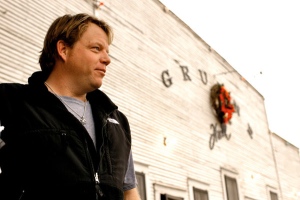
[Video][Website]
[5.27]
Ian Mathers: Come away, children. It doesn’t matter what we think of this song – it’s not for us.
[0]
Richard Swales: Is anyone in this genre actually doing anything new? This could have been released ten years ago and it’d still have sounded this drab, cliched and entirely dated.
[3]
Anthony Easton: This is a good study in contrasts. Darius Rucker, carpetbagger, strung cliches todgether, and those cliches did not suggest any hardness, anything outside a v. middle class bubble of smugness, a bubble in which Rucker did not work to gain entrance. Pat Green’s inclusion of prison, of teachers perhaps not knowing the answer, of newness and hardness is different, less cliched and more prickly.
[7]
Chuck Eddy: Crossing Alabama’s “40 Hour Week” (“Hello Detroit auto workers, let me thank you for your time”) with Roxy Music’s “Manifesto” (“I am for the man who drives the hammer, to rock you ’til the grave”) might’ve made “What I’m For” my 25th favorite country (and 58th overall) single of 2009’s first half even if this longtime Texas cult artist turned country radio B-lister didn’t buck Nashville convention by actually mentioning inner cities in a positive light. As is, the song inches commercial country a pinch to the left, or at least the center, and its melody and singing are good enough to make Green seem more than just an opportunistic cornball cynically tapping into Obama-era zeitgeist. His album, of which this is the title track but not the best song, has an outside shot at my 2009 Top 10.
[8]
Edward Okulicz: The quiet verses express a calm, dignified mindset along with rapport with the world – its stray dogs, auto workers and the like. But when it rocks out, it seems tacked on, obligatory rather than necessary, the sincerity level goes down a bit and the effect is marred.
[6]
Martin Skidmore: A statement of philosophy, most of which no one would disagree with, but which has some of the ordinary-working-man feel of some Merle Haggard classics. I rather like his croaky Texan tones on the quieter parts, but the rocking out is too routine. I’d like it better if it didn’t sound like an attempt to write a big singalong anthem, I think, and there is always an unattractively normative element in these kinds of manifestos.
[6]
Anthony Miccio: I may tend to vote for saccharine Tom T. Hall universals over line-in-sand jingoism, but I’m also for picking up the pace a little. And I wouldn’t assume you know my stance on abortion because of it.
[5]
Matt Cibula: Like the general feel of this, and even many of his examples. But it’s kind of depressing that he’s for the inner city teacher who sees God everywhere instead of, oh, say, the inner city student. Also, he didn’t talk about how he’s a raging creationist; didn’t need to because he admitted it in a single from a few years ago. Other than that I’m liking it.
[7]
Alex Ostroff: “You don’t have to guess what I’m against if you know what I’m for.” I suppose not, but what you’re for is vague, unobjectionable, and kind of hackneyed. Nonetheless, it’s suitably schlocky for a motivational barn-burner, and it’s nice to hear the (inner) city get mentioned without contrasting its ‘depravity’ to the purity of rural living. That said, I know what I’m against: lazy country song-writing that simply consists of lists of things.
[4]
Jonathan Bradley: The most interesting moment on this comfortable — and comforting — Pat Green single is the not-so-relaxed affirmation that the singer is for “the Detroit factory workers.” It may be opportunistic as well as heartfelt, but then again, so are the lines about old guitars and paying attention when your pops wants to put his two cents in. But the uneasy reference to current economic troubles tempers the laundry list of Americana touchstones, giving the song a tension not immediately apparent in the midtempo country-rock arrangement. And then you start noticing a few more Blue State pitches, in Green’s tribute to poor urban schools and redeemed felons, and the song adopts a more complicated stance on the traditional icons the singer reps. And even if that doesn’t entirely erase the hucksterism, Green’s full-throated delivery dilutes much of the residual gaucheness.
[7]
Michaelangelo Matos: He forgot, among many other things, lists, mom, apple pie, clichés, and tuff-guy corn.
[5]