Controversial till the end…
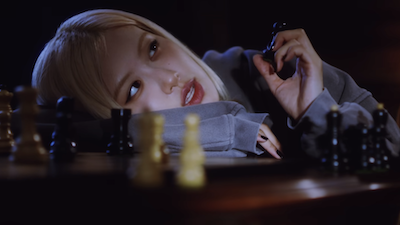
Dave Moore: Rosé has glimmers of becoming a Godzilla-like global competitor at Taylor Swift’s monsterverse scale. She’s no literal Taylor Swift, as a glimpse at the serviceable-at-best words will attest. But she has figured out how to do Taylor-pop as a mode of muscular easy listening, the kind of soft behemoth that elbows its way into supermarkets and pharmacies for eternity. Interestingly, the one time I’ve heard this song in the wild was at a tea shop that immediately skipped it for NewJeans, and I’ll admit it really didn’t make a lot of sense in that context — the closest the playlist got to A-pop was Ava Max featuring on an ILLIT song. It may just be that Rosé, relatively new to a solo career but already eclipsing her former peers, is a bit stranded between shores. But hey, you know who else was big and green and got stranded between shores but eventually made a really big impact on the world?
[8]
Claire Davidson: I was aware of the many Taylor Swift comparisons “Toxic Till the End” has received, but no one warned me that the song wasn’t even imitating Swift’s good albums. Instead, it pairs buzzy synths with an overwrought bass beat and acoustic guitar touches that feel ripped straight from the worst pop songs on Red, creating a claustrophobic sense of bombast that leaves Rosé struggling for air. That said, this song’s worst offender is the lyrical content, which borrows all the overused therapy buzzwords used to condemn a bad person but doesn’t come up with a truly cutting barb to indict this ex—at one point, the song seems to even poke fun at its use of clichés with the line “His favorite game is chess, who would ever guessed?” Swift, despite how poorly a lot of pop music fits her voice, has the vocal exuberance to convince the audience that she at least believes what she’s selling. Rosé, on the other hand, hardly sounds engaged, even on a chorus that demands full-throated belting.
[3]
Kayla Beardslee: “Toxic Till the End” isn’t so much a song as a museum exhibit dedicated to the history of Taylor Swift (“Back then, when I was running out of your place… I ran out crying, and you followed me out into the street”), and the comparisons are distracting enough that I’m not sure how to feel about it as an actual piece of music. I think the vocals are mixed a touch too loud over the instrumental — even for singer-songwriter-y songs, you want some interplay between the music and lyrics. Maybe Rosé should call up Nathan Chapman and ask for a simple yet distinctive guitar riff to thread throughout the verses.
[5]
Melody Esme: A perfect angry breakup song sells you with tone and performance, regardless of specifics. So I knew this one had me hooked when Rosé sang “His favorite game is chess” and my reaction was “Ugh, typical.” I don’t even have anything against chess. But here, Rosé masters the art of turning minute specifics into gigantic red flags (when’s someone gonna just title one “Bitch Eating Crackers” already?). I love the line about Tiffany rings, too, a strangely transparent bit of wealth-flashing. Most artists keep their heartbreaking confessional songs and their capitalist excess songs separate–the “7 Rings” and the “Ghostin” on different plates. That this one doesn’t care makes it even more honest. Sometimes, amidst your heartbreak, you have to take a breath and realize you’re actually more upset about the thing you left at your ex’s place than the breakup itself. For me, it was my mug with Shinji from Evangelion on it. For Rosé, it was some disgustingly expensive pieces of jewelry. Few things transcend class; pettiness is one of them.
[9]
Mark Sinker: I am very bad at chess (beaming_halo.emoji), so I’m happy to cosign a chess bro = toxic logic — and maybe even pretend I don’t find “bro then played chess on my chest OMG” a bit of a muddling elaboration. But she evidently plays too, and the logic of the sounds of the song tells us she’s the villain. Don’t make me explain this.
[8]
Taylor Alatorre: A tightly-coiled burst of crystalline breakup pop that’s more complex, lyrically if not musically, than its Metric-by-way-of-Disney Channel exterior may suggest. “You had me participating” is the kind of sober self-indictment, and “you wasted my prettiest years” the kind of benevolent vanity, that make the scenario feel real and lived-in, even if the curtain-raising segue into the second verse tries to tell us it’s all just winking stagecraft.
[8]
Hannah Jocelyn: In Steven Spielberg’s autobiographical The Fabelmans, John Ford asks burgeoning filmmaker Sammy Fabelman to describe a series of photos on his wall — specifically, where the horizon is. Ford says “if the horizon is at the top it’s interesting, if it’s at the bottom, it’s interesting, if it’s in the middle it’s boring as shit.” What this advice means in the film is not that you shouldn’t put the horizon in the middle. Sammy has to frame his shots with intentionality; otherwise he’ll inadvertently make his bully look like a god. “Toxic Till The End” was written by a team who only puts the horizon at the bottom because Taylor Swift did. This is what you get when you take out the intensity that made touch-starved sapphics think she could only be pining for women, the overwrought wit that made Swift sound both alien and #relatable, the fussiness of a Martin, Antonoff, or Dessner. You’re left with the basics, which Rosé delivers with no urgency whatsoever. There’s one striking line here (“you wasted all of my prettiest years”), but it’s so impressed with itself that there’s a filler line building up the final blow. The beauty of a bridge-ending lyric like Swift’s “give me back my girlhood, it was mine first” is that it blows the song wide open and contextualizes the rest of the lyrics. What does “you wasted all my prettiest years” mean? What are the implications when a line like that feels specifically written to invoke a line about stolen girlhood? Do they even think about that? No, they don’t. Even though this is an Amy Allen co-write, it sounds like it was made by people who don’t know why those tropes exist. Take away the shiny production (that synth at the end is pretty, fine), and I guarantee it would sound like a middle-school Swiftie performing her first song at a talent show to polite applause.
[0]
Alfred Soto: With Taylor Swift hanging out long enough to serve as influence for a generation of artists, I gotta go case by case. The chorus’ rise-and-fall cadences echo Avril Lavigne’s tricks without her tread. Rosé delivers the lyrics with the bright crispness of the wine that bears her name and with as much depth. By all means act chipper when the guy who stole your girlhood stands in front of you, but at least demonstrate that the mirror has a few cracks.
[5]
Ian Mathers: I want to be very clear: any of the people involved in writing or performing this song may well have had shitty, damaging, unfair experiences, and my opinion of the song has nothing to do with them (and certainly isn’t intended to minimize or dismiss them). But as a pop song, what’s important is not the reality or nature of any of those experiences (which aren’t my fucking business anyway), but the fact that the song feels very much like, well, a performance. Slightly removed, no real heat or pain — and also, unlike some other songs on the topic, no sense of the blank numbness this kind of scenario can cause. It’s not that more “genuine” seeming expressions of these feelings are any less crafted; it’s just that they tend to feel less crafted.
[6]
Al Varela: “Ladies and gentlemen, I present to you… the ex” crawls into my skin like a million cockroaches scurrying when the lights turn on. It’s like someone scrolled through a stan Twitter account for a few mind-numbing hours and wrote a song out of it. And then sent the lyrics to a producer who hasn’t listened to new music since Taylor Swift’s Red.
[3]
Julian Axelrod: This is a prime example of my favorite subgenre “Lyft pop,” which I was lucky enough to hear for the first time in the back seat of a Lyft. It’s so funny to put out a Halsey tribute two months after the Halsey album full of tributes to other artists.
[7]
Will Adams: A perfect stock song: one that was probably on co-writer Emily Warren’s shelf for years before being dusted off for Rosé’s album; one that could have fallen into the hands of an EDM producer — say, Jason Ross, Illenium, NOTD, whoever — which would’ve resulted in something at least sonically punchy. But here, we get something utterly, completely fine.
[5]
Nortey Dowuona: Evan Blair had a tall mountain to climb with me. Emily Warren is a longtime favorite of mine and of many pop music critics. So what do you get when you divide 12 by -5?
[2]
Katherine St. Asaph: This is a good, honest .500 pop song. Rosé makes .500 pop goddammit. Salt of the earth, punch the clock, even win/loss ratio pop music. She whiffs a couple, guess what? She’ll slay a couple, too. But don’t get too excited or let it go to your head. No imperial periods here, no sir. That’s hubris, which this blue collar, hard working everywoman artist doesn’t have. A few hits in a row, this artist, true to form, will balance it out with a couple a flops. Yes sir, that’s our 2024 solo debut ROSIE. A good, honest .500 pop album.
[5]