Looking forward to future single “Magnetism”…
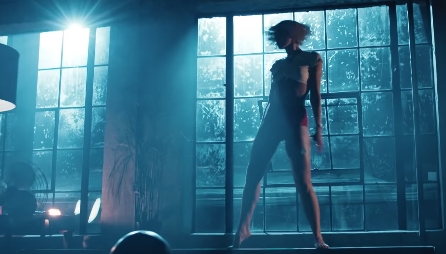
[Video]
[6.54]
Thomas Inskeep: Diplo keeps on keeping on, but as long as Silk City is part of his continued output, he can do whatever he damn well wants. This collaboration with Mark Ronson is devoted to straight-up classic house music, and there’s precious little music I love more than classic piano house. Combine that with the big-lunged, assured, made-for-dance-music vocals of Dua Lipa, and you really can’t miss. This doesn’t. In fact, by virtue of the fact that I prefer her vocal to Merriweather’s on “Better,” it gets a score one point higher. Which makes sense, because this is a perfect four-on-the-floor stormer.
[10]
Jacob Sujin Kuppermann: Diplo & Mark Ronson do their jobs adeptly — they’ve been working since around when house music (and not just skilled pastiches of it) was last actually popular, and so slipping into the ’90s aesthetic of “Electricity” is natural for them. But over their pulsating, piano-driven beat, one of those dancefloor concoctions that sounds like how dancing feels, Dua Lipa outshines them. While “One Kiss” showed that ’90s nostalgia-dance beats were a natural fit for her restrained, throaty vocal style, that Calvin Harris track seemed more concerned with showing off his array of producer’s tricks, chopping her up into unrecognizable pieces as the song went on. Here, though, Silk City’s production has the good sense to let Dua run rampant over the entire track. There’s barely a second of “Electricity” without her voice, which has a subtlety and emotional range beyond those of most of her peers in the new pop wave. That overexposure works dividends both obvious and sublime — a line and melody like, “And even if I could I wouldn’t turn on you,” is a gimme, but the way she draws emotion out of a tongue-twister like, “If you only saw a friend in me I’d be bittersweet,” letting the middle of “bittersweet” go all breathy before drawing it down to finish “-sweet” is something rarer. Top it off with an excellent bridge/outro, which cools the energy of the track down and turns it spacey, and “Electricity” sets a high bar for the careers of all involved, whether long or short.
[9]
Micha Cavaseno: Mathematically, one would think that the combo of Ronson & Diplo would outweigh and sufficiently overwhelm the brilliance of Dua Lipa’s previous garage house classic “One Kiss.” However, between the attempts at the garage pitch-shift turning into murky goop, Lipa’s limited range getting pressed against her boundaries unflatteringly (especially with that weak sounding Vandross bite on the chorus) and that clichéd ’60s soul outro distracting from the retroactivity they’re already coming up short on, you can see that this record is a failure with relative ease. Still, given how brilliant the former attempt by Dua Lipa to do house went, one hopes she doesn’t lose sight of what actually worked.
[3]
Katherine St Asaph: The insistence that Dua Lipa has an on-record personality is the biggest gap between me and the next generation.
[5]
Alfred Soto: My out students rave about Dua Lipa; I saw a blankness. But house music demands blankness; it should sound like any person unafraid of loudness and boldness stepping in front of a mike while a piano pounds Latin-indebted melodies and the beats go bump bump. Turns out Dua Lipa and Silk City can do beguiling blankness, especially when Dua drops a couple notes.
[7]
Juan F. Carruyo: I’ve failed to catch the Dua Lipa bug as I can’t see what distinguishes her from Selena Gomez or whichever is the hottest pop star at the moment. She seems to get by on her charisma — which is plentiful — and crucially; the material provided at hand. She could be a great disco diva should she desire, but this sounds like every other song I’ve heard from her.
[4]
Will Adams: Dua Lipa’s sudden turn as a house vocalist seems strange not because it’s so obviously calculated as a cog in her trajectory, but because her voice is… not a good fit for it. “Electricity” is standard piano-chug house, but the note you expect to be belted in the chorus — “I want to let to know” — is a G4. It’s as if the song was intended for someone else but transposed a fifth down once assigned to Dua Lipa. Suddenly, the lack of feeling I got from “One Kiss” starts to make sense.
[5]
David Lee: Boilerplate pump-up ’90s piano house is never not enjoyable. But, man, imagine if Jennifer Hudson was the vocalist! Instead, Dua Lipa makes me that much more aware of the chorus’s limpid release, a slow ooze of good vibes when I’m craving a thunderclap of joy.
[6]
Nortey Dowuona: Plunging synths drop down as Dua Lipa smoothly slides past as bass thwacks rise, then dip out as whistling synth strings clip on then fly alongside like streamers as the drums bounce in and carry Dua and the beat away with them, before stopping to pick up Chinese food, milkshakes and some actual party streamers then take off into the stratosphere, leaving behind slithering guitar and teardrop drums to pick up the slack.
[8]
Stephen Eisermann: House music is best when accompanied by a big voice, and on “Electricity” Dua provides all the fire the song needs. Sure, it’s pretty standard house music, but Dua uses the song as just another example of her artistry and proof that she deserves the worldwide fame she has recently garnered.
[7]
Joshua Minsoo Kim: “Electricity” finds Diplo and Mark Ronson utilizing a tried-and-true template that opens up a space for Dua Lipa to take the absolute center stage. Her voice has never sounded more full, more potent, more crucial to a song’s success. That last bit is so undeniably true that the lack of new lines and unprocessed vocals in the chorus only has me begging for more. “One Kiss” established the necessity for Dua Lipa to continue down the dance music route; “Electricity” finds her finally coming into her own.
[7]
Crystal Leww: Diplo gave an interview to the Dance Chart radio show on Beats 1 about the intent and influence of the Silk City project that spans everything from Nightcrawlers to French Touch to Cajmere to Eric Prydz to Chicago house. I have such disdain for Diplo’s continued culture vulture approach to making music, especially borrowing sounds and influence from Black people. “Electricity” was written by Beyoncé songwriter Diana Gordon (a Black woman) but ultimately given to Dua Lipa (a white woman) to sing. Diplo says that he was looking for a big voice. And maybe Gordon didn’t want the vocal duties on this song, but it’s hard to listen to “Electricity” and not think about tracing a straight line from CeCe Peniston and Crystal Waters who never got their due 25 years ago to every single anonymous Black woman (Yolanda Quartey, Kelli-Leigh) who has contributed to the careers of the persistent stars of EDM this decade.
[5]
William John: It’s fitting that “Electricity” arrived not long after a change in the seasons; it bursts with new promises and earnestness, dispositions that dominate at those points in the year where the weather is changing and the surroundings seem to take on a different colour. Dua Lipa, who in little over twelve months has transitioned from record label hostage to bona fide superstar, has been criticised for her inelastic and aloof performing style, but here emphatically rebuts such judgments with a vocal contribution that’s equally warm, zealous and rousing. Pair that with ascendant house piano chords and belief in love without a perpetuity period is suddenly an energising possibility.
[9]