Fair to say the video budget for this is well down on her usual…
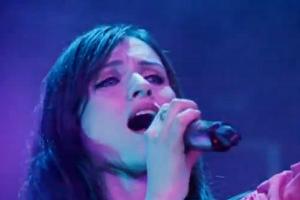
[Video][Website]
[6.89]
Michaela Drapes: Oh Richard X, should I be disappointed that you’ve slapped poor Sophie onto a treacly retread of something she’s already sung? I guess the downside to being the voice on one of the most influential dance tracks of the past 15 years means that occasionally you fall into a trap of your own making.
[4]
Ian Mathers: It’s still weird to me to think of Ellis-Bextor as having been the singer in an indie band, because she’s just so well suited for this kind of thing. “Starlight” isn’t the best example of her skills — it’s not nearly as good as (for example) “Me and My Imagination” — but it’s still yet another reason to be glad for the existence of “Groovejet (If This Ain’t Love).”
[7]
Jonathan Bradley: I hold out hope that, as the charts return to Ellis-Bextor’s dancefloor milieu, the toffiest voice in pop might find her career newly resurgent. “Starlight” is not a comeback, but that’s no fault of the tune, a coolly luminescent number that insinuates itself into one’s good graces with its dreamy liquid quality alone. It has the same loose focus as falling asleep in the taxi cab on the way home from the club. It would be nothing more than well-crafted deep house, however, without Ellis Bextor’s vocal, which has the same incisive clarity as that of Stevie Nicks, who wrought a similar sparkle from comparably edgeless tunes.
[8]
Matthew Harris: Ellis-Bextor saunters into this song, giving us all of the oxygen that’s leaked out of contemporary pop since the ’80s. But it’s not laid-back; there’s enough jittery guitar faint and deep in the mix to propel those blooming, steaming synths across the dance floor. I love the way Ellis-Bextor sighs out “We are one.” It’s not longing, really, but the much more gay emotion of forgiving yourself for all that damned romantic regret and starting again.
[8]
Hazel Robinson: This would be so, so beautiful if Kylie sang it. Ellis-Bextor’s made such a career of being icily distant that I can’t imagine referring to her first name, though, so this breathy moment of shimmering dancefloor intimacy feels like nothing.
[6]
Isabel Cole: I want this song to be somehow more: to build to something bigger, or pulse a little harder, or go somewhere more unexpected. It doesn’t, but its lush, gauzy beauty is enough to keep me listening anyway.
[7]
Edward Okulicz: Sophie regains a little of her dignity with an elegant backdrop of whooshes and a close cousin of early album track “Nowhere Without You.” It’s about as close to background music as producer Richard X has done, but it’s pretty nonetheless. Sophie’s able to put some weary romanticism into the lyrics that would sound dull out of a lesser singer, but it’s somewhat telling that the outro where she wordlessly wails the chorus’s melody ends up being the best bit. She’s just a little too cold to really sell parts of the verses, and you can imagine her wishing someone would turn up the bosh level a bit. The song would be perfect if it would just ache a little more.
[8]
Alfred Soto: The synthesizers and creeping rhythm program keep a tactful distance from Ellis-Bextor’s voice, which is the aural equivalent of the hyphen between her two last names: faux-polished, understated about its “dignity.” While the track coaxes her into diva-hood, she stays earthbound, as if starlight meant nightlight.
[6]
Katherine St Asaph: They’re not stars but rhinestones glowing beneath what isn’t starlight but a lamp. But Sophie’s voice quavers and quivers like she doesn’t know the difference; by the time it pierces the fog over the bridge, neither do I.
[8]