As you may have heard, it’s been a big couple of weeks (dare we say… [ED. NOTE: WE DO NOT]), and today in particular is a very big day. What day, specifically? It’s BEARDO FACETAT DAY! Today we cover music’s greatest growlers (and also Taylor Swift).
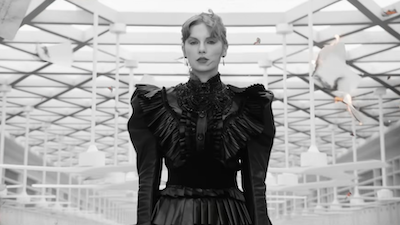
[Video]
[5.24]
Taylor Alatorre: Here is what it sounds like to sink fully into a warm bath of your own distilled hype. Many will naturally want to join in, others won’t, and much like Post Malone, some of us won’t be quite sure what we’re doing here either way. Monoculture status: still dead.
[5]
Isabel Cole: The one thing I liked about “Look What You Made Me Do” was the shock of hearing Taylor Swift, still possessed of a sweetheart persona despite the fact that she has never made much effort to hide the glint of something sharper in her eye, just come right out and say, unadorned: I don’t like you. After years of waiting, on “Fortnight” Taylor finally returns to a kind of disgust indifferent to its own justification, this time in a song that smartly avoids falling into its own metatextual abyss the way so much of reputation did. Your wife waters flowers, she drones; I want to kill her. The sentiment is shocking, made more so by the jarringness of the not-quite-rhyme (flowers/kill her). The opening verse’s even starker lack of a rhyme scheme suggests both the artist’s desire to discomfit and the narrator’s dissociation. She calls herself a functional alcoholic (well, a former one, although it’s entertainingly ambiguous whether she means formerly an alcoholic or formerly functional), but the track is giving mother’s little helper, a dark fantasia of suburban despair made more, not less, unbearable by the fact that the trap isn’t the picket fence so much as it is the ineradicable knowledge that once, long ago, she had proof that it didn’t have to be like this. At the end of reputation, she wrote, “Hold on to the memories / they will hold on to you.” “Fortnight” turns that idea from promise to prophecy, wrenching its bitterness from the unavoidable fact that past joy can’t be outrun any more easily than past sorrow. The official lyrics give the first two lines of the chorus as for a fortnight there we were / forever running to you, indicating she’ll always be reaching for her lost love, but you can hear the line break differently when you listen: for a fortnight there we were forever. The setting is new, but this is classic Swift: happiness fades, but memory lives mercilessly on. By design or by accident, Antonoff’s much-derided featureless electronic wash is the perfect musical backdrop for this story, placing our antiheroine in a musical Levittown.
[7]
Hannah Jocelyn: This feels like a non-entity at first: a chill background playlist song from someone whose personality, for better or worse, had always come through. Even something like “Ready for It?” has “Burton to this Taylor” and other wordplay that could only come from Swift. There’s not even the WTFery of other songs on the record, nor the tempo changes and orchestration that make “Smallest Man Who Ever Lived” captivating. Antonoff’s insistence on making everything sound 20 feet away means “it’s just there” is an overstatement. “I love you it’s ruining my life” wouldn’t pass a hundred notes on 2014 Tumblr. I feel more when Anna Indiana changes “we’ve lost it all” to “I’ve lost it all” than I do when Taylor goes “I wanna kill her.” So I was going to give this a [0], but this piece of shit genuinely grew on me. Taylor and Posty have surprising chemistry, and in its distance, the song finally recalls the ’80s torch ballads Antonoff always tries to recreate. Unlike the rest of The Tortured Poets Department, “Fortnight” isn’t bogged down in lore; it remembers to be catchy, not the superstar equivalent of someone venting on their Close Friends story.
[6]
Alfred Soto: Apart from the novelty of a Yank sending thousands of listeners to Google “fortnight,” this opening track is rather spongy as a single — but then “Anti-Hero” became a genuine radio hit and gained resonance from being one. Maybe she’s listening to Elvis Costello: “I was a functioning alcoholic/’Til nobody noticed my new aesthetic” is the sort of clanking couplet he’d cough up for Trust.
[5]
Jacob Sujin Kuppermann: Reading lyrics as poetry is a fool’s errand even when the artist is practically demanding you do so; all of the critiques of “bad lines” on this album fall into this trap. That being said, “I was a functional alcoholic until nobody noticed my new aesthetic” fails even within the conceit of Taylor’s songwriting. It’s not that it’s incomprehensible per se, but as the second line of a lead single it hits leaden, a collection of perhaps evocative syllables that utterly fails the melodic math test. You can’t help but furrow your brow and figure out if there was perhaps a less convoluted way of assembling that. It’s inauspicious: given that the Antonoff-Swift production conglomerate seems more and more devoted to creating musical backdrops completely lacking in notable features, you simply must listen to “Fortnight” for the lyrics. Leave aside that I want to write it as “Fortnite” half the time; this is tedious work, a haphazardly set work of serious adult drama that sounds oddly bloodless – Swift has sounded far more unhinged (that’s a compliment, to be clear!) on songs where she does not write of a desire to kill. Post Malone is, as he often has been, a saving grace. His harmonies, and especially that counterpoint outro, feel inspired in a way the rest does, helping Swift achieve the Tango in the Night white-collar decadence that she otherwise merely feints at.
[4]
Katherine St. Asaph: A demonstration in one single of the lyrical style of The Tortured Poets Department and why I often like it. (The curse continues!) “Your wife waters flowers / I want to kill her” is concise and striking. “I was a functioning alcoholic till no one noticed my new aesthetic” is deadpan and hilarious; it could do numbers online. “You’re the reason … quiet treason,” meanwhile, is a self-consciously crafted Classic Taylor Swift couplet, and thus: not good! The arrangement is drowsy and ambivalent in a way that fits the subject matter — residual feelings that are maybe mutual, maybe not, but drowned too deep beneath years of history to discern the exact angles. Post Malone’s voice is extremely pretty in a way that shouldn’t fit him.
[6]
Nortey Dowuona: Session drummer Sean Hutchinson doesn’t appear at the beginning. Taylor’s vocals take up so much space in the mix that the sub-Vangelis synths and the programmed kick-snare pattern laid down by Jack Antonoff have to become almost a support system to protect the lyrics. Despite Louis Bell’s effors to properly mix both Taylor’s soft soprano and Posty’s far more powerful voice, they blend together in a detrimental way: Taylor too thin and dull to take hold, Post nearly spectral lest he upset the balance of the mix, the synths so rigid and locked in they can’t spill out and swarm your ears — a frustrating miasma of 1987 pablum. So when Hutchinson’s more present, sharp contribution comes in at the second chorus, this time repeated twice, it barely makes a dent: Sean is following the pattern. Serban Ghenea and Bryce Bordone’s mix doesn’t provide him any glory but simply makes it clearer that this is played by a more present and steady hand. And since both voices have been squeezed tightly by Louis, the additional drum work is fruitless. It feels like a credit more to soak up the blood, not to crack the skull itself.
[5]
Wayne Weizhen Zhang: So thoroughly bland that it makes me yearn for the days of Taylor Swift lead singles that were jarringly, appallingly terrible (We’ll never forget you, “ME!”). Short aside: who is Post Malone’s A&R? The fact that he’s on Tortured Poets Department and Cowboy Carter is baffling given his fundamental blankness.
[4]
Oliver Maier: What’s good about the Blue Nile is that you can’t describe any of their songs as “plodding”, or “featuring Post Malone”.
[3]
Andrew Karpan: Something is objectively funny about hiring Post Malone to approximate the idea of Mr. 1975. It’s not great, but it works well enough. On some level, one imagines that someone out there wishes his face could be also used as a prop to try and sell an Amazon remake of Road House. At any rate, Swift makes a remarkably similar use of Malone’s face. It lingers harmoniously in the backend when it finally comes in, humming pleasantly like an old car, or like the past made present again. While nowhere near the most interesting or even the most comic study of Swift’s last relationship contained on the ambient, floating morass of content that it kicks off, “Fortnight” nonetheless persists, ticking along in a kind of styled and graceful camp, toward the mediocrity of middle age.
[5]
Anna Suiter: Doing your gardening while your cheating husband watches you music.
[7]
Brad Shoup: In a vacuum, “Fortnight” is, well, in a vacuum: suspended and inert. The phrase “in America” drops the ceiling significantly. When used by the workaday pop-rocker, it’s lazy; when used by a superstar, it’s cynical: a provincial way to give your emotional narrative fake heft. Swift’s so focused on tracing these thick thematic lines off of the story that she neglects to give anything interesting to Posty, who’s kind of a whiz at mixing alcohol and longing. He’s never been in her class as a songwriter, but he’s the better melodicist, and he could have contributed something wry and pining to match the tone of Taylor’s text. But resentful detachment is the move here, an inversion of Gwen Stefani’s “Cool”.
[4]
Ian Mathers: Well, this is now the Fortnite song (although they spelled it wrong? weird unforced error there) I’m second-most likely to get stuck in my head, after that one kid’s “American Boy” rip.
[6]
Mark Sinker: As conscience requires I have a vast essay percolating, a full-on battle of the five armies between cultural historians & critics & reviewers & fans & bystanders, as the vast and ghastly dragon flitters once again above us all — but before all that… FUNKO POPS LINE IN SWIFTIE EXES REAL AND MADE-UP WHEN
[8]
Dave Moore: It hits a [6] easy just for “alcoholic/aesthetic” (I’ve started taking every criticism of this album and adding “…and that’s why it’s good!”), but the question is whether there’s another point left in it. Pros: I can remember the melody, and Post Malone provides the anonymous duet vocals I haven’t heard from Swift since Nathan Chapman was filling in. Cons: Annoying use of “fortnight” and [gestures at discourse]. But like a lot of lyrics on this album, “fortnight” sounds better than it looks, and I’ve learned to stop worrying and ignore the discourse.
[7]
Michael Hong: The best lines — “I was a functioning alcoholic”; “I wanna kill her” — are buried under cumbersome lore and clunky metaphors, but that’s what makes “Fortnight” feel so real. It’s diaristic in its desire to record every feeling, to chase every thought, no matter how lame. The disservice is that despite shattering her American dream, the music still sounds like she’s content to live in its image.
[4]
Leah Isobel: I guess I feel pity for Taylor, which means the song is doing its job. I’m also grieving a relationship that I loaded with more significance than it deserved, one whose obvious dysfunction was part of its gravitational pull. The narrow melodic and emotional range of “Fortnight” accurately articulates how the afterglow of such a relationship feels — still intoxicating, maybe even more so because its failure leaves several eminently pullable loose threads. But it doesn’t offer any path toward self-awareness or redemption, even as it reaches for the kind of twinkling pop climax her songs practically require. Instead, it promises that Taylor will live in this mythical (probably shitty-in-real-life) fortnight for the rest of her life, or at least the rest of the album cycle. She’s doomed to an eternal significance that makes even her soupiest, mushiest songs cultural events. Sucks for her. And us.
[3]