Controversy.
[Video][Website]
[5.80]
Jonathan Bogart: Swift’s limitations as a singer are on display all over 1989 — she aims for evocative, and hits awkward — but here she doesn’t even have her economic storytelling facility to rely on. It’s generic swelly montage music, and her thin voice, attempting to sound dramatic, instead sounds shrill.
[3]
Thomas Inskeep: Oh, the ache, the delicious ache of this song. “I can see the end as it begins” is the kind of lyric dying to be matched to a scene of a pining Molly Ringwald in a John Hughes film. And then “Someday when you leave me/I bet these memories/Follow you around,” oh god. I’m practically in tears. Combine the lyrics with Max Martin and Shellback’s ultra-atmospheric, gauzy production, and you’ve got a record that outdoes Lana del Rey at her own game. Great on the album, even better as a single, and I swoon every time.
[10]
Micha Cavaseno: Fuck it I was right the first time. The production on this beast of a record is the most gaudy amount of disdain. “It’ll sell regardless, so just put on one synth for a while and let her continue these gaudy nursery rhymes and rather than have her you know, develop an actual singing voice lets let her stay in her ‘nyah-nyah, nyah-nyah-nyah’ range but since she’s grown up now, have her do fake orgasmic coos of delight. Also have her do the same moon-june-spoon level cliches she’s been throwing out at us and inexplicably taken to the bank” and so many other withering sentiments taken to new heights. This song is of an exceptional quality in someone’s dreams, but not here.
[1]
Megan Harrington: The going wisdom on “Wildest Dreams” is that it’s Taylor Swift’s cover of Lana Del Rey — this based almost entirely on the fact that she sings a bit throatily in certain places. No offense to either auteur slash empire builder, but “Wildest Dreams” is no Lana Del Rey song. Standing in a nice dress and staring at the sunset? Try wandering the beach high in a caftan. Taylor Swift, no matter her vocal register, is like taking a thousand Noxema commercial storyboards and setting fire to them while reciting the Devil’s prayer. She is Zeena LaVey. “Wildest Dreams” sounds like a Belinda Carlisle song.
[6]
Alfred Soto: She listened to the Moody Blues number, keen for keen, sigh for sigh. Maybe Voice of the Beehive too. Even the synths pump multicolored dry ice smoke. What charmed as an album track should work well as fall radio fare.
[6]
Katherine St Asaph: 1989 needed a ballad, and I suppose this would be the formula for it: marry Swift’s Nashville melodies to heartbeat percussion, closing-credits-ballad synths and breathy everything. There is no reason why this should be incoherent, and yet Swift, Max Martin and Shellback find a way. The track’s littered with unkilled darlings, like the chirpy “this is getting good now!” or the phantom-squad backing vox on “burning-burning-it-it-down-it-down,” which in no way fit the mood; yet I can’t honestly say these should be left out, because they’re worlds better than the insipid fairytale nonsense that Swift still hasn’t abandoned. Indicative: gushing “he’s so tall!”, an idea of a girly coo perhaps imagined by someone who lists his height on their Tinder profile. Similarly, the contents of wild dreams: well, you can imagine. Never the contents of wild dreams: staring genteel into the sunset in a nice dress.
[3]
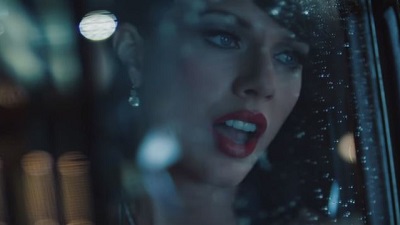
Sonia Yang: I’m often guilty of introducing this song to a friend by saying “Imagine Taylor Swift doing Lana Del Rey better than Lana Del Rey,” but the dreamy sunset-washed arrangement and Old Hollywood aesthetic of the video does nought to dismiss that. The song alone shows that sometimes one thinks relationships that will eventually crash and burn are still worth the beautiful moments and thrill (a recurring theme on 1989, a far cry from the lamentations of a I Knew You Were Trouble era Swift). The video lends a more interesting angle as it seems like a commentary on the Hollywood dream (The Lucky One, anyone?). Between the short-lived romance and the artifice of stardom, I don’t know which one is a metaphor for which, but I don’t care. All that aside, it’s wonderful to hear a track where Swift sings in a smokier, lower range and lets her voice glide over the high notes instead of belting them like her pop diva peers.
[8]
Will Adams: The Lorde comparisons on “Blank Space” felt hasty; the Lana Del Rey comparisons here are an understatement. Verse cadence and register lifted from “Summertime Sadness,” chorus melody practically transcribed from “Without You,” Swift singing like she listened to Born to Die on a loop for a week in an attempt to learn how to sound breathy. Carbon copying Lana wouldn’t bother me so much were Swift not doing it while stripping away everything that makes Lana compelling. The red dress gets downgraded to a “nice dress,” the man gets downgraded to a silhouette, the production gets drowned in syrup. The ugly truth of 1989‘s middle third, after the bombastic singles and before the moving ballads, is that it’s painfully average, shooting for wild dreams but barely worth a thought.
[4]
Jonathan Bradley: Taylor Swift beds down in Lana Del Rey’s HOLLYWOOD SAD CORE. The tryst offers creative possibilities: the heartbeat drums thump beneath cotton sheet synths, transmuting Swift’s familiar romantic mode into eroticism and heartbreak into something darker. More than any other song in her catalog, “Wildest Dreams” is an exercise, and Swift holds back from replicating the depths of Del Rey’s fatalism; the morbid undertones of the last requests and pleas to be remembered are here to heighten the emotion rather than suggest literal death. The little deaths are inescapable, though: Taylor’s gasp of “this is getting good now” is a palpitation all of her own. Even for the transparency of its influences, “Wildest Dreams” is marked heavily with Swift’s imprint: this isn’t cosplay or pantomime. Compare it with “Sparks Fly,” which even while more energetic, more ravenous, less dazed, possesses that same fervid breathlessness. It also shares with “Wildest Dreams” an impossible intimacy, where “his hands are in my hair, his clothes are in my room” compresses the entire world into the two people present in those pronouns. After the dreadful colonialism, incidentally, this is the video’s greatest sin: trying to realize the small spaces of an affair as broad stretches of savannah and crowded film premieres.
[10]
Brad Shoup: Martin & Shellback go to the Kleerup well for this: negative-image synths against warm strings. It’s a good start, but Swift’s outsmarting herself: she can’t write a scarf-dangling-out-the-convertible swooner without clocking the end of all good things. Poignance can come from that, but not here, not quite. It comes from her sighs: not the self-awareness, but curiosity of someone wondering what she sounds like against silence.
[7]