…The Name Of This Band (Thanks Jackson For Suggesting This!) Because This One Is Especially Long Also How Do They Introduce Themselves At Live Shows I Know I Could Just Figure This Out By Going To One Of Their Shows And Hearing For Myself But What If They’re Not Performing In My Area For A Long Time And I’m Gonna Be Stuck Here Wrestling With The Question Of How To Shorten Their Names So I Can Tweet About Them More Substantively (Their Name Takes Up 61 Characters) You Know What Just Because I’m A Joker I Think I’ll Just Refer To Them As “&” Haha Aren’t I Clever Okay I’m Done I Promise And I Am Really Really Sorry If You Read All Of This Please Enjoy The Blurbs Thursday.
[Video][Website]
[6.07]
Jackson Maxwell: Just the name of both the song and the band in question are intimidating as hell. Then there’s the story, from which most of the song’s lyrics are culled. Diana — the otherwise anonymous female vigilante who killed two bus drivers in Ciudad Juarez, Mexico in retaliation for years of unsolved rape and murder cases perpetrated by drivers like them — isn’t just your typical hero, she’s a figure of pure power. As the music below them simmers to a boil, David Bello demands you take an immediate side (“Do you become the driver when they drop you off?”) before Katie Shanholtzer-Dvorak makes that decision for you (“Put up a statue/of the new killer/out of chains/in the waxing moon”). Diana’s story is one of rising above institutional oppression with blunt, terrifying force, and no one could have done it more justice than The World Is a Beautiful Place & I Am No Longer Afraid to Die, who give the story catharsis and overwhelming beauty, while refraining from dulling a single edge. Punk rock for the new age indeed.
[9]
Alfred Soto: A soft amble through late nineties Modest Mouse indie tropes like fiddle, high-pitched vocals, and a faint sense of Southwestern space. Logical, too, for this emo band has gone and written a tune about the vigilante named Diana who killed Ciudad Juarez bus drivers. “We are brave and strong, but you don’t quiver” is right fucking on — too soft and agreeable for such a subject.
[5]
Phil Ginley: If there is one thing I’m an unapologetic sucker for it’s lyrically convoluted call and response emo ballads that are about revenge killing. The Explosions in the Mogwai roaring guitars meshed with lines like “Are you afraid of me now?/Well, yeah. shouldn’t I be?” sound like something laughable on paper but fortunately in this case, amplifying dramatic theatricality up to 11 is what makes this genre so darn enjoyable in the first place.
[8]
Will Adams: “Are you afraid of me now?” “Well, yeah.” Somehow I feel like that conversation wouldn’t have that sort of tone. The story is compelling and deserving of a multi-tempo, long-form structure. I just question whether the thematic material befits a delivery like “well, yeah” over a major chord progression.
[5]
Scott Ramage: You would need to go back another ten years from 2014 for this to feel current, relevant or exciting; even then it would be a stretch.
[2]
Austin Brown: Even before I knew what this song was about, there was power in the lyric “Are you Diana, the hunter?” It’s a subtle turn of phrase too. Not “huntress,” but “hunter,” the lack of gendering somehow adds to the gravity of what’s being described here, a duet that’s distinctly about the triumph of underdog good against evil, with the added edge of justified revenge. But while it’s enough to get TWIABP credit for their social relevance, the words themselves and how they’re amplified is what really gives the song its power. The best TWIABP songs are tone poems, with very little rhyming or chorus work but plenty of purely emotional riffs backing raw lines: the yawning guitar during “ease the babies,” the shift to a triumphal post-rock riff after “send her thanks,” the pounding during “are you Diana, the hunter?” Of course, nothing beats the sudden quietude that accompanies “Well yeah. Shouldn’t I be?” In a genre often pilloried for its male inattentiveness to the realities of cross-gender relationships, TWIABP takes the road much, much less traveled.
[10]
Leonel Manzanares de la Rosa: It’s interesting when a single has changes in tempo; in this case there are two, and they fit the narrative ambitions of the song perfectly. TWIABP are Emo revivalists, but their instrumental dynamics have more to do with early 00’s post-rock bands than with the Midwestern scene of the 90’s. The wailing guitars and the violin melodies are beautiful, and the drumming is top-notch; however, in the last third of the track, they missed a huge opportunity in the intensity department, both vocally and musically. They went from 5 to 8, when they needed to go all the way to 10. Maybe some screaming vocals would have helped. It is a song about killing, for God’s sake.
[7]
Iain Mew: The varied guitar mixture of yawns of delay and high end squeals makes for an effective set-up, but as clichéd as it is I want this kind of thing to build to something big. The briefest of angry noises before flipping into tame pop-punk doesn’t cut it.
[4]
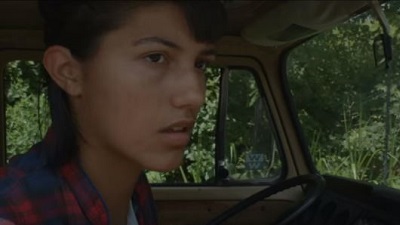
Joshua Kim: Sort of a sucker for emo bands with both male and female vocalists, so this is already right in my wheelhouse. The tricky part is making sure it’s affecting without being cloying, and they’ve mostly got that down. The post-rock tremolo picking, the strings and chimes, the (painfully) straightforward lyricism — it all comes with the territory, but it feels justified here. Considering this song was inspired by a true story, it’s best to engage with it while watching the video. It makes the progression of the lyrics and instrumentation feel more fully realized. That chugging guitar part opening up into the “our hands on the same weapon/make evil afraid of evil’s shadow” is one of the cheesiest things of 2015, but man does it seem anthemic when watching retribution take place.
[7]
Hannah Jocelyn: When I read this title, I was taken aback. I’d known the band, if only because of its name. But there’s a reason why I had some trepidation listening to this; on that date, a family friend of mine was struck by a car, and would pass away the next morning. What I remember feeling is something not like the overwhelming catharsis of this song, but more like a muted sadness; an energetic young boy with a bright, unpredictable future suddenly robbed of life. Needless to say, this song is not about his death; it is a constantly shifting attempt at an opus, about a real-life vigilante who sought to avenge women harassed and raped by bus drivers. Without that context, a line like “are you afraid of me now/well yeah, shouldn’t I be” sounds clunky, as if it shouldn’t be there. With that context, knowing that the same line closes the original This American Life article about Diana, the song becomes powerful. But maddeningly, “January 10th, 2014” is more reminiscent of the sensationalist language newspapers used to cover the boy’s death (one I nearly remember verbatim; “his battered body laid across the rain-swept sidewalk”) than something with genuine empathy for Diana herself. The song doesn’t feel insensitive, necessarily, but as empowering as “make evil afraid of evil’s shadow” is, that lyric risks reducing a topic as complex and vivid as this story to clean-cut pithy apothegm. And for something with this much at stake, that’s disappointing.
[3]
Thomas Inskeep: Pushing/pulling emo math-rock that parties like it’s 1999 and they just signed with Tooth & Nail. If you like this kind of thing, you’ll like it, and if you don’t, this won’t change your mind. I find it tolerable.
[4]
Stevie Kaye: TWIABP&IANLATD somehow sails between the Scylla of Midwestern emo revivalism and the Charybdis of post-rock by doubling down on youthful ridiculousness/invulnerability, maximalism worthy of The 1975. Lifted (directly!) from news reports and given a theatre-kid/Anaïs Mitchell at-hand mythological gloss, “January 10, 2014” juggles a male/female duet, guitar tones that both twinkle and chug, and violin without lapsing into their earlier work’s concealing murk.
[8]
Brad Shoup: Something like Diana is special: a myth that compels its own myths. TWIABP’s myth is draped in the golden hour, lurching toward a forest. The man gently interrogates; his line satisfied, he affirms. “Let’s write this down together,” he mewls. But it’s not like Diana’s stand-in is particularly foreboding here; she’s more triumph than vengeance, bodysurfing some tight kick pedal and post-rock guitar squeal. In fact, she doesn’t even appear until halfway through: Katie Shanholtzer-Dvorak plays the awestruck observant first. “Put up a statue of the new killer,” she says. The result is a peculiar lullaby.
[6]
Patrick St. Michel: The pure commitment to theatrics on “January 10th, 2014” sells it, as all the usual trappings of “emo” can’t derail something this well plotted out. It’s like the best-possible result for an episode of This American Life — literally — in how it approaches the drama and emotion of the story. Not sure how many times I’d voluntarily seek this out, but when it is playing, it’s gripping stuff.
[7]