From the mean streets of Minneapolis…
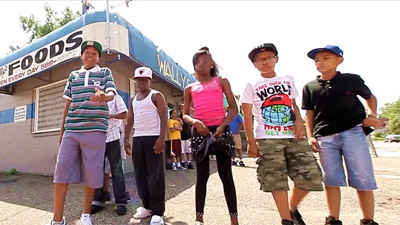
[Video][Website]
[6.50]
Patrick St. Michel: Moment of honesty: I’m not reviewing “Hot Cheetos & Takis” the way I regularly approach a song because 1. the North Community Beats And Rhymes Program is doing good work in their community 2. being critical of elementary school kids seems mean and 3. this is ridiculously fun. That said…this is pretty great. The Y.N. Rich Kids rap well, and deliver a bunch of great lines – “I’m on point like an elbow/hands red like Elmo” sticks out, but the whole thing is its own “memorable quotes” section. Even better – and what makes this a better meme than most of the har-har-hip-hop gag videos popping up on my Facebook feed – is that the kids seem to genuinely love rap music. They reference Kanye and Jay-Z, Soulja’ Boy Tell ‘Em and Cali Swag District among others, and include details that sound like a result of listening to a lot of rap on the radio YouTube (that “bow!” the first kid adds at the end of his verse slays me). Plus, whenever I hear this I get a big grin on my face.
[8]
Anthony Easton: It’s kids making music as part of an after-school program, so I will seem like a total asshole saying anything really negative. I will say this: the importance of cheap distribution of digital production studios and the Web as a distribution method is vital in allowing more voices to emerge. I am glad that they are having fun and letting people see them have fun. For the record, Sweet Chili Heat Doritos are much better than Hot Cheetos, and Takis seem to be a Yank thing.
[3]
Katherine St Asaph: It was probably inevitable that in our virally infected, Buzzfeed-buffeted lolculture, a song called “Hot Cheetos and Takis” would not only emerge but be called, multiple times in apparent earnest, the best rap song of the year. Granted, Y.N. Rich Kids make it harder than usual to object, at least not without feeling like a shit. They are preteens. They are doing this through a YMCA after-school rap program. Their song is fine — “Hot Cheetos and Takis,” as a conceit, is no worse than “Laffy Taffy” or “chicken noodle soup with a soda on the side,” the kids have clearly practiced, and Luger-like productions are built to scale. Unlike Rebecca Black’s “Friday,” neither they nor the song are generally being trashed. Oh, there’s racism, naturally — I got through three pages of YouTube squabble over whether their Y should have included more white people to be “diverse,” then gave up because the fan blades suddenly seemed enticing. But there isn’t outrage. Per my “Friday” screed, that takes away whatever problem I could have with this. So why do I still have one? Maybe it’s that I don’t like Cheetos getting free advertisement, an argument that’d appeal to everyone who also whined about the gay rights debate being enclosed in a Chick-Fil-A nugget box but that isn’t quite it. Maybe I hate the vapid, predictable deluge of taste-test articles and bloggers faking enthusiasm, but that’s a problem with media, not music. Let’s take another tack, then. If the big argument in favor of viral culture is that it’s populist, let’s see what the people have to say. Top-rated on YouTube: “Atleast[sic] they’re not rapping about hoes and rims.” Moving on: “it makes me happy that the girls aren’t grinding and booty dancing.” “These kids are talented. And they sound better half the *real* rappers out here.” “the stereotype of food to race is hilarious.” Many LOLs and LMFAOs and “haha swag”s. Two rape comments I will not reproduce because fuck everything. What we’re dealing with is some kids’ fun project repurposed, as most kids’ projects aren’t, for the benefit of everyone who preferred Sophia Grace Brownlee’s “Super Bass” to Nicki’s on grounds of being “cuter,” the folks who heckle Lil B about bronies and those whose rap collections consist of Donald Glover and The Lonely Island: amusing, disposable hip-hop for people derisive of the real thing. [0] for them. [10] and a gold star for the kids. Crunch:
[5]
Brad Shoup: Had YouTube been around in the ’70s, Lord help Jr. and His Soulettes. Weird as it may feel to review an after-school project, I’m still glad we live in a time where this stuff has a chance to hit beyond weirdo collectors and floggers of the obscure. It’s charming as hell, tightly crafted, and snaps crisply into popular music’s long history of brand celebrations, from “Air Force Ones” to “G.T.O.” to “Carbona Not Glue”. And everyone’s having a blast: they know that quivering bass thickness and those church bells signify mythology to some, but pop to others. So phooey on everyone who just hears parody: Dame Jones and crew are living in and acting their age. (The part where Nasir should say “hell no” and edits with “no ma’am” is so right — you’d think his teacher walked into the booth.) Glentrell rasps, Jasiona darts, Frizzy Free sounds like he’s got a cold. They made a song, it’s fun, ta da.
[9]
David Moore: For the last couple of years I’ve been running a media enrichment program for elementary school students. Kids have produced a handful of novelty tracks, some more-or-less professionally produced, most not. But regardless of the final quality of the product, there’s a tension I notice around “authentic student voice” when kids write and create their own media work in a classroom or enrichment environment. Reductively, “progressive” educators often assume that kids naturally have something meaningful to say, while “conservative” educators assume that kids naturally have nothing to say (Roger Myers, Jr. nicely summed up the latter position: “You kids don’t know what you want! That’s why you’re still kids! ‘Cause you’re stupid!”). A friend who identifies as a progressive educator tells me that the longer he teaches in an elementary school, the more conservative he seems to get. Meanwhile, teachers who assume out of hand that their kids have nothing to say are often surprised by what they do express when given the right structure and opportunities. Kids both do and do not have meaningful things to say; they sometimes have ideas but lack ways to express them, or they know how to express the “right answer” without really understanding it. I’ve started to appreciate the ways that expecting kids to say Something Meaningful often does a disservice to the “less-meaningful” things that they say more genuinely. And I’m also sensitive to the ways that a totalizing expectation of Meaningful Voice denies kids their basic right to be curious without necessarily having Something to Say (yet). So I heard this delightful thing and was immediately wary: I try not to assume anything about the process that goes into something like “Hot Cheetos and Takis.” Who knows who came up with what, whose idea was whose, how much the kids were responsible for the aspects of professional production that makes this a genuine hip-hop single, etc. etc. I’ve seen too many kids’ voices manipulated by adults for cynical or at least questionable ends (“Friday” was a youth media project, y’all!) and too many rough-around-the-edges products by kids assumed to be “authentic” to students’ voices even though the projects’ (charming) amateurishness was mostly thanks to semi-inept adult supervisors (“Friday” was a youth media project, y’all!) to take anything about the creation of this song for granted. I want teachers and students who do projects like these to document the processes through which they’re made. But I have to bracket what I know of that process as a critic; I know literally nothing about how this song came about and I’m not rushing to find out, and when I do find out I will continue to ignore it, for the most part. Not because that’s Something Critics Should Do (beware of Somethings Critics Should Do), but because the more I know about the process, the more I’m thinking mostly about what the kids learned and what they got out of the experience. Could have been a lot. Could have been nothing. Could have broken the Hippocratic Oath, which teachers should be forced to take. Like it or not, as a critic I’m more concerned here with what I learn and what I get out of the experience. What I learn is that Hot Cheetos and Takis are great (I find them too spicy, usually opted for purple Skittles and a Cherry Coke). What I get out of it is at least the second-best novelty single of the year. As far as I can tell there’s no “Hot Cheetos and Takis” horse dance, so “Gangnam Style” still has my vote for horsefart single of the year (appropriate!).
[9]
Jonathan Bogart: Mama I got them poststructuralist product placement blues.
[7]
Jonathan Bradley: Is providence or genius responsible for the way this hook scans precisely with “Beamer, Benz, or Bentley”? “Hot Cheetos & Takis” has a similar appeal to that latter day Lloyd Banks track: not just in the bone-brittle beat, but the way it offers the rappers involved the opportunity to tangle their flows and personae around it. And while Y.N. Rich Kids aren’t quite the 21st century Kris Kross — that’s Willow Smith — these kids make the most of their sixteens (or fewer). My favorite moment is Nasir devastatingly inverting the rhyme scheme at the same time he switches up his flow: “My hands red like Elmo/My mama said, ‘Have you had enough?’/I looked her and said ‘no ma’am’/I go ham.” It’s not dope by elementary school standards; it’s dope by rap standards — and this is on top of “I’m on point like an elbow.” Nearly as entertaining is Jasiona’s quick tongue and the unhinged eight bars that make up the contribution from pint-sized Flocka Ben 10.
[7]
Iain Mew: I like the percussive crunch of the hook but there are two verses that make “Hot Cheetos & Takis” worth crediting for being good and not just good for kids. One is the thrilling chaotic abandon of Ben 10’s freak-out, and the way that the track just barely manages to carry on as if nothing’s happened. The more important one is Nasir’s, which brings in a fantastic self-aware juxtaposition humour in rhyming “no ma’am” with “go ham” and talking about his mom going to the ATM for him that actually uses his status as a kid as an advantage through more than just novelty value.
[7]
Alfred Soto: Better than “Pass The Dutchie.” Not as good as “Jump.” But damn good evidence that phonics classes and vocabulary quizzes work.
[6]
W.B. Swygart: “Buyin’ ’em with my allowance/So nobody can stop me” – as lyrics go, it’s a good ‘un. Never actively annoying at any point, but five minutes is a bit much.
[7]
Andy Hutchins: Almost three weeks after initial infection, I still love this. I just wish they cooked to it like I do.
[8]
Will Adams: We’ve heard this story before: a child (or seven) makes some perfectly innocuous music as an after-school project. A certain song somehow grabs the attention of someone outside of his or her immediate family and friends, and gains national attention. This time it’s different. Now everyone’s laughing with the children, and the same people who loved to hate “Friday” can now hate to love “Hot Cheetos and Takis.” But something is still wrong. I almost feel bad giving a low score, because it has nothing to do with the kids. They’re clearly having fun, attacking each word with impressive gusto. The production’s standard, nothing less, nothing more. The problem is with the responses. For old folks, it’s a talking point for the icky state of grown-up rap, a snob appeal for something better than the garbage that’s all over the radio. For the Pitchfork crowd, it’s the confirmation bias of any rap that isn’t Kanye as some intellectual void that has no musical value. For ironists, it’s the “summer’s final truly great jam” which is totally funny because it’s SO ridiculous, you guys. These responses cover a spectrum of grossness, too, as they highlight to varying degrees the populace’s trivialization of an important aspect of black culture, something that shouldn’t be taken seriously, “yo.” And all of this for a group of children rapping about Cheetos. Come on. Novelty is novelty.
[2]