Going pop, to two decimal places…
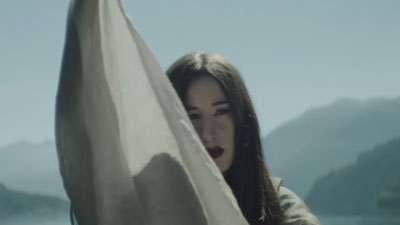
[Video][Website]
[6.78]
Anthony Easton: For how much Zola Jesus talks about isolation and danger, or about the coldness of her childhood and the coldness of her work, I find it oddly welcoming. This isn’t quite warm, but she isn’t the Russian ice princess either. I feel like she is opening up, ready to include the audience, not in the goth magic they want, but in something more protective.
[6]
Hazel Robinson: Taking the muted, patient aesthetics and dynamics from her melancholic work, this is something I so profoundly relate to I suspect it might end up as high up my year-end list as Hikkomori’s #1 position last year. This is the sound of someone surprised to be happy — a strange vertigo feeling inhabiting a structure that only previously expressed sadness. It’s skin-crawling and I’m glad for her and a bit choked up for me.
[10]
Brad Shoup: It would take a higher range to truly soar over the accused here, but then we’d probably have a Kelly Clarkson song. Zola makes the curious choice of remaining stone-still while the triplets kick the song down the road. I like the tension, and the real sense of direct address.
[8]
Micha Cavaseno: The funny thing is when everyone insisted Zola’s goth atmospherics were so “experimental” way back when, it was a bit hard to take seriously. So it’s with weird relief to see her fully embrace a more pop sound and kind of shrug off the insistence that her voice was going to belong to some obscure figure. “Dangerous Days” is grandiose in a way that suggests a world of dark pomp, but also in a way that suggests the irritating quality of people who OD’d on 80s pop. I don’t get how, say, Zambri weren’t good enough to make the cut straight out, and the inevitable build Nika’s made from “obscurity” to potential expeditions into the world of commercial danger is rewarding. Especially with the really-not-THAT-advanced dance production. Whatever keeps the mood stirring I suppose.
[5]
John Seroff: We’ve been warned against comparison but that’s okay. I can’t really think of anyone Zola Jesus particularly reminds me of as I have a hard time remembering what she sounds like at all, sometimes even while I’m listening. All four points here for a fairly compelling chorus; not too sure where the rest of the song went.
[4]
Iain Mew: One of my favourite singles of the year is Lo-Fang’s “When We’re Fire”. It takes the gentle and lovely verse melody of Manic Street Preachers’ “You Stole the Love From My Heart”, and instead of a clomping stadium rock chorus, turns it into electro slink. I mention this because “Dangerous Days” is very close to another iteration of the same melody, and funnily enough, it splits the two, providing electro slink AND a giant chorus and making them sound right together.
[7]
Danilo Bortoli: Nika Danilova has always seemed to be fighting something in her career so far: the structure of the songs she sang were the enemy, always creating a dialectical movement. At one side, there it was, the oppression of her mechanical sounds. At the other, there was her voice, struggling be heard in a loud tone. “Vessel” is the symbol of this moment. “Dangerous Days” tries to fix this apparent dissonance; it’s, in its heart, a pop song (something she’s been saying since Taiga was announced), and a very good pop record. She’s not fighting anything here, mainly because Zola Jesus finally found her inspiration in nature — and, therefore, seems to be trying to capture it. And while trying to portray her fascination, she (and she can deny it as much as she wants), ironically, reached out to the pop music she’s usually dooming in order to create this lush, ambitious wall of sound. And this is what is so great about “Dangerous Days”: she could only make this song, a record so full of meaning, while finally enfolding what’s on the radio.
[8]
Scott Mildenhall: Shoulder-shrugging laments form one of the most reliably loose thematic groups pop can offer. “Dangerous Days” is only nearly, but not quite, at the shoulder-shrugging stage though — there’s still a sharper anguish about it, making statements of disappointment feel like questions. Why weren’t you the one? Why didn’t you fight? Why didn’t you stay? It’s ambling down the path to acceptance, half-heartedly kicking a can across it.
[7]
Alfred Soto: It’s got a beat, you can dance to it, and the vocal yields to every Goth impulse from Siouxsie to Fever Ray. It’s also a blank.
[6]