2 Bar 2 Tipsy
[Video]
[5.71]
Will Adams: “Got another Bar Song for you and all your friends” — I could tell.
[4]
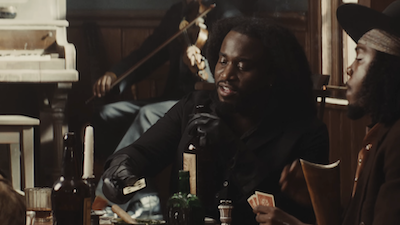
Al Varela: “It’s just the same song again” is a trickier critique than it seems. Apparent repetition can be a sign of stagnating creativity or an unwillingness to do more than just “the thing that worked the first time.” Or you could see it as more of the thing you loved (unless you didn’t love it the first time, in which case…). Shaboozey has had this problem before, and it’s more pronounced on this song since it directly refers back to “A Bar Song (Tipsy)” (“Got another bar song for you and all your friends”), but that’s never bothered me. Even though Shaboozey has a clear and recyclable formula, he’s really good at recontextualizing it. Instead of a beaten-down ode to making it through hard times, “Cowgirl” is the moment in Shaboozey’s concept album where the titular Cherie Lee walks into the bar and catches Shaboozey’s eye, a moment of bliss where two unlikely people feel instant sparks dancing on the bar floor and drinking the night away. The crowd behind them hooting and hollering along with the gorgeous fiddle refrain and the catchy stomp-clap beat makes it so easy to get wrapped up in the atmosphere. “Cowgirl” is just as inviting and warm as “A Bar Song,” but a little flirtier, more about you watching two people steal the show rather than finding joy in exhaustion.
[9]
Julian Axelrod: If this was a Shaboozey impersonator trying to remember the lyrics to “A Bar Song (Tipsy)” after several shots, it would be pretty impressive what he ended up creating. Unfortunately, this is the real Shaboozey, and this is not “A Bar Song (Tipsy).”
[5]
Alfred Soto: I find Shaboozey’s twangy lower register ingratiating, which helps when I hear “A Bar Song (Tipsy)” for the 4396th time at a Starbucks. There’s nothing to say about “Cowgirl” except to praise the fleetness of this product.
[6]
Charlotte Gaze: “A Bar Song (Tipsy)” emerged from relative obscurity to top the Hot 100 for 19 weeks for a simple reason: it was an undisputed anthem. In the two and a half years since, you could tell one of two stories about his continued success in the historically anti-black genre. Perhaps: Shaboozey is a witting pawn of the Nashville system, happy to recycle his first hit ad nauseum and sell his tracks to ESPN with no regard for the tokenism he’s playing into. Alternatively: Shaboozey utilizes his unique position to bring good tidings of joviality and alcoholic recreation to the masses while he has his brief spotlight, and any political handwringing is noise. “Cowgirl,” a rote 4 chord stomper with a winking name drop of “A Bar Song” in verse 1, a strategic name drop of Charley Pride in verse 2, and a winsome air that’s entirely too effective at dulling the majority of my cynicism, seamlessly bolsters both of these narratives.
[6]
Nortey Dowuona: Abas Pauti, Shaboozey’s longtime creative partner, gets a writing credit here. Now, earlier collaboration “Beverly Hills” contained gems like “Price on my head, got the law on my back/Too many opps I can barely keep track” and “Got a purebred racehorse parked in my crib/Got two six-shooters on the side of my hip,” and was explicitly made to blend those Tennessee and Mississippi influences into the melange of Atlanta/Memphis bassy funk of hip hop. Since being safe and accessible was the goal, “Cowgirl” softens and truncates that structure thanks to Jared Cotter, Mckay Stevens, Whit Kane, all industry lifers with hits and gems under their belts. Their lines still follow that melange, though: “Shooters gotta shoot, so I gotta take a chance/Girl, go and throw your boots on, thank me in advance” and “Do you like whiskey? Why not try some Tennessee?/Girl, if you like this song, let’s put it on repeat,” just as punchy and direct as before yet smoother, softly delivered in that warm, honey-dripping voice to the melodies instead of to the drums. Maybe Pauti can do more than run Shaboozey’s label, right?
[6]
Cathal Donovan O’Neill: “Cowgirl” is a clear sequel to “A Bar Song (Tipsy)” — Shaboozey immediately calls it out as such. Despite being more fun, it’s a more cynical track. “Tipsy” was a little more clever than it gets credit for: its paean to the club was belied by Shaboozey’s weary delivery and emotionally-flayed lyrics, and it’s got a proper B-verse verging on rap. ”Cowgirl” is a straightforward party song with a second verse that feints at the same move, then reveals it as ornamentation as it goes back into the A-verse’s structure. That shift in tone puts this firmly into stomp-clap territory (not meant as an insult!) It’s got it all: A sincere outpouring of affection towards another person, or the human condition, or the bar; soul-searing yearning, whether for a better time or for returned affection from its subject; and an interest in American folk or country music placed over traditional pop-structure songwriting. Plus, y’know. Kickdrum and handclaps akimbo. That said, you’d feel like a real shitkicker being mean to this. Yes, it’s uninspired, but the reasons this qualifies as stomp-clap are the same reasons you can see it being played at someone’s wedding: There’s something genuinely romantic here. The fiddle and guitar sound great, warm as summer sun playing on the fields. The percussion-and-piano drop in the last chorus mixing with the bridge is a cheap sweep but it’s hard to deny it. It’s mawkish and yeah, it’s dumber then “Tipsy”, but who’s having more fun?
[5]
Claire Davidson: I gave Shaboozey the benefit of the doubt when reviewing “Good News,” hoping that its similarities to “A Bar Song (Tipsy)” were just a natural reflection of Shaboozey finding his identity as a songwriter. Listening to “Cowgirl,” though, I worry that there genuinely might not be much beyond the surface. This song shows so many similarities to his breakout single that it’s a little alarming, from the steady handclaps of the verses to the low-end ripples of percussion that lend the chorus its heft. Even the shout-along hook feels like an overworked retread, as Shaboozey’s limited vocal expressiveness again limits him from wringing much resonance out of his admittedly cheeky barman poetry. The one factor that differentiates “Cowgirl” from its predecessors is its prominent fiddle melody, and while its soothing warmth does elevate the song, it’s a new varnish on the same coat of paint.
[6]
Tom Feckerdt: Look, I’ll always be somewhat drawn in by those goddamn four pop chords, and I dig a tight fiddle like any sane person, but sorry, no dice here. Personally, I got no stakes in Shaboozey’s viability as a mainstream figure one way or the other, but if I were him I don’t think I’d release a single that has the same tempo and same type of drunk chant-y hook as my Billboard record-breaking hit, let alone one that mentions a bar in the first line of the chorus. Speaking of the chorus, clumsy: props for shoehorning such a non-melodic word like “alcoholics” in there, but the mainline just keeps going down, and “Shotgunnin’ beers, she don’t even know whose beer it is” reads like a first draft. Apparently this song is meant to be part of a “concept record” with a story and characters and everything, but removed from that context, this being part of a larger narrative is laughable and retroactively makes this sound like jukebox musical shit. And considering that this was allegedly written years before “A Bar Song (Tipsy),” it further cements this as a rough take on a concept that was improved on later (or earlier?) and, to put it bluntly, signals a low ceiling on Shaboozey’s whole thing.
[3]
David Allun Jones: I’m still not quite sure what to make of Shaboozey’s Outlaw Cherie Lee Experience’s punch-drunk amalgamation of Red Dead Redemption, Lin Manuel Miranda and old Hank Jr./ Waylon/ Willie records with a Tarantino-esque Hollywood blockbuster supporting cast and American-rap (Hopicana?) score, but it mostly succeeds due to the same genres-clashing charm that helped make the globe-conquering “A Bar Song (Tipsy)” resonate far past initial hot takes concerning the J-Kwon sample and “son of Nigerian immigrants doing country” of it all. This is especially so on the album-eras bridging “Cowgirl”, which introduces the Cherie Lee love story while providing the surely label-mandated request to ride “A Bar Song”’s saloon singalong coattails. Whereas that song used shots as needed distraction from the real world though, “Cowgirls” keeps the mood merry, the track’s drunken fiddle zig zags, stomp-clap raucousness and dance-floor flirtations neatly nailing the joyful highs of the best Friday night blue collar barroom crawls, with little concern for the dark, toilet-worshipping woes to follow. Cheers indeed.
[7]
Jacob Sujin Kuppermann: There’s a certain weariness here to Shaboozey’s tone. Where “A Bar Song” was shot through with a certain glee, like he couldn’t believe the listening public was letting him flip “Tipsy” into country-crossover chart Valhalla, on “Cowgirl” the man seems tired, trapped in his conceit. The rest of his new album seems more conceptually adventurous — finally: Gunna, Orville Peck, and Sam Elliott united! — but “Cowgirl” is the worst of all worlds, a perfectly competent self-aware retread that cannot quite use that self-awareness to say anything interesting about itself or its author.
[4]
Ian Mathers: My favourite thing about the Shaboozey songs I’ve heard so far is that no matter what the subject matter is, there’s always this slight fatigue or even weariness to the timbre of his voice. That worked great for “A Bar Song (Tipsy)” (a much more obviously conflicted track), but I think I might like that quality even more here when the lyrics are much more straightforwardly flirtatious. But maybe my favourite thing about this particular Shaboozey song? Maybe the fiddles.
[8]
Taylor Alatorre: Shaboozey’s entry into the mainstream was that time-honored American mixture of hard work and blind chance, so I can’t fault him for seeking to maximize his time atop an unlikely wave. Craft is very much in service to banality here, but there’s just enough of the former to make the latter feel like an earned bit of respite from all the outlaw-mythologizing. I don’t like the asymmetry between using Dolly Parton for a specific title-drop and using Charley Pride’s name itself as a pun. I do like the phrase “wild little cowgirl,” and the way Shaboozey’s typically undistinguished voice seems uniquely suited to its phonetics.
[5]
Katherine St. Asaph: Shaboozey has maybe one of these left before it qualifies as taking a dead horse to the old town road. Enjoy it now!
[6]