Seven over seven by my count now – we may yet get this top 10 up by June…
[Video][Website]
[7.10]
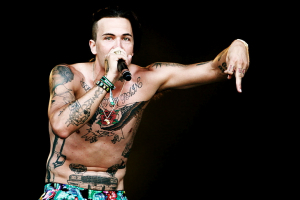
Jonathan Bradley: A decade ago, the South’s token white rapper was Bubba Sparxxx, and he leaned into the redneck stereotypes associated with his race and region. In contrast, Alabama-native Yelawolf, whose Caucasian looks are more skate rat than good ol’ boy, has a musical approach less Hazzard County and more Yoknapatawpha. His dense lyricism mimics the pestilent Dixie creeper called kudzu: it is wild, rambling, and seems like it might get into anything. That makes the rapper a good match for the introspective Texan Trae, and together the pair tackle flutes, pattering drum lines and a muted trumpet that is a little too awkward to be much more than admirable. There’s a lot of wilderness in which to get lost in on “Shit I Seen,” and though it isn’t the most infectious number Southern rap has produced, its gothic sensibility means it is never anything less than absorbing.
[6]
Anthony Easton: Cinematic in that old Hollywood sense, and the reckless speed/intensity of the flow suggests that even though Eminem discovered him, there is a geninue split in practice.
[7]
Chuck Eddy: Yela’s verbose sandpaper-drawled storytelling picks up momentum as it goes along, but takes longer than it should to get there, and Trae’s motormouth turns monotonous fast. But the matador/ conquistador horns and chorus hook, which feels sung even if it isn’t, make the dark mood work. So I reckon this probably equals anything on Trunk Muzik 0-60 — most of which I’m ambivalent about — except for “That’s What We On Now” and “Billy Crystal.” And he still might be my favorite new rapper in years.
[8]
Zach Lyon: Something intriguing about all of this and no part of it is particularly bad. Yelawolf’s flow is pristine given his slow slurring, and the first verse is a great showcase, compared to his second where he sounds too Eminemy. I can’t latch onto more than a few of Trae’s words at a time but his verse is just as interesting nonetheless. And I didn’t expect a chorus that was, of all things, catchy. Thought this dude was an indie band, nice surprise.
[8]
Kat Stevens: This is a superb showcase of rapping. It’s one of the few songs of 2011 I’ve put on repeat, marvelling at Yelawolf’s tongue-twisters and haunting images.
[9]
Martin Skidmore: I like the trumpet a lot (anyone know where it’s from?), but I’m a little less taken with his rapping, which is both nimble and slightly stiffly timed. I like the guest verse from Trae the Truth, who is fast and likeably gruff.
[7]
Alfred Soto: Bustling – trumpet solo, skittering post D&B beat, faint horrorshow organ, two motormouths rapping atop. Yelawolf’s gift for accelerating past rote triumphalist sentiments is enough. For now.
[6]
Doug Robertson: The backing is almost a mariachi take on a James Bond theme, and would probably work amazingly as an instrumental, but with the rap over the top it becomes… well not bad as such, but just kinda generic, which is ironic given the chorus.
[6]
Jer Fairall: He comes off as a thoughtful, if not particularly subtle, storyteller and the setting is a note-perfect mix of noir-ish horns, lush 70s soul strings and persistent early 90s loops. His flow and vocal presence are disappointingly weak, though, denying the song the anchor it needs to really click, one provided by the considerably more agile Trae Tha Truth all too briefly.
[6]
Jonathan Bogart: The languorous Latin-jazz disco of the backing track is the real star here, even as Yelawolf and (to a lesser extent) Trae Tha Truth manage to surprise and impress with obvious dynamics but less-than-obvious lyrics. If this is the standard he’s setting, I might even have to start being curious about the album.
[8]