…and we’ve lost track of the critics on this, but like it well enough.
[Video][Website]
[7.14]
Anthony Easton: I am crying listening to this. Cut the world, like a umbilical cord, like a channel through a peninsula so that he can prove that he is forever an island, like the skin in trauma; the cutting you do to convince yourself there is something underneath; the cutting that you do so you can feel; the cut through the wound as the first step, to stitches, to cauterization, but nothing is cauterized; the cutting off, and the cutting forward; the cutting of the genitals; cutting as an example of an autonomous heart — or maybe something more conventional, the cutting off of an angry lover? All of this, and the most mournful instrumentation since “Moon River.” Is it only post-Kushner that I can think of this as like “Moon River”?
[10]
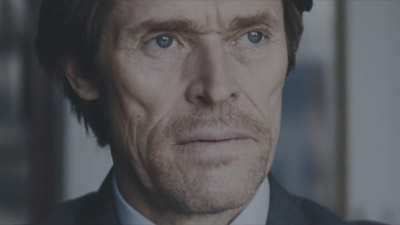
John Seroff: “Cut the World” is Anthony in Broadway-mythological mode, the title song of an imaginary musical somewhere between Dancer in the Dark and Koyaanisqatsi brought to too-literal climax in the perhaps-best-avoided SCUM Manifesto-themed video. Focus instead on Hegarty’s rich, tawny refrains inlaid against The Danish National Chamber Orchestra’s languid winds. Your best return here, contrary to the song’s theme, is to accept pretty at face value.
[7]
Mallory O’Donnell: Listening to Antony after enduring most of these characters on TSJ is like a musical high colonic. Many don’t seem to “get” his particular brand of tearful, gay art deco whimsy; I say try harder. He is clearly one of the last great agenda-less auteurs, singing as he does like the last church in Europe is burning beneath his feet, moaning away beautifully while the world shakes its head in wonder.
[8]
Alfred Soto: When Antony is in chansonnière mode, I hide under the table. Removed from certain contexts (e.g. as The Other in Hercules and Love Affair’s “Blind”) he simpers with a hurt and vulnerability that is way too unleavened for my ears. I have to admit: he gets away with it here, thanks to the restraint with which he rides the chorus melody.
[5]
Patrick St. Michel: The orchestral arrangement and Antony Hegarty’s voice are gorgeous, both sounding like they should be in some high-end theatrical production. “Cut The World” manages to be just as dramatic, though, the bleak first verse of the song leading into a bridge that offers relief before eventually sounding hopeful come the end.
[7]
Brad Shoup: So there’s the power of the question (“But when will I turn and cut the world”) and the weakness of the arrangement. The fury at having no recourse for desire once you’ve processed everyone else’s, and that fury’s extinguishment by the cloying call-and-response for piano and flute. Normally, that’s the pleasure of Antony’s chamberwork: the signifiers scream taste, but then he folds and presses them into something much more clever. (See his Donau duets with New Orleans’ Sissy Nobby, which turned a quasi-mashup session into something like a private joke between the two men.) Still, that question is too powerful to be borne this way.
[5]
Jonathan Bogart: It takes a lot for me to be able to hear past symphonic orchestration — the real thing, oboes and tympani and everything in full eighteenth-century coloration — when listening to modern popular song. (I don’t know whether Antony Hegarty would care to be categorized as popular song, but until he writes something with a less trite chord progression, that’s what he does.) “Cut the World” works as it does because of the emotional power of Hegarty’s voice. Which is a statement that could be made about any A. and the J.s song, I realize, but here he escapes both self-pity and (only just; see the coloration) fetishizing an imagined kind of Proper Music in order to put across the sort of grandly eloquent emotion that it takes a good deal of restraint to properly frame. “Restraint” may seem like an odd word to apply to this song — to this artist — but unlike the video, it doesn’t bash you over the head with its own self-important drama Rather, it lets you live in it.
[8]