And so we’re back from outer space…
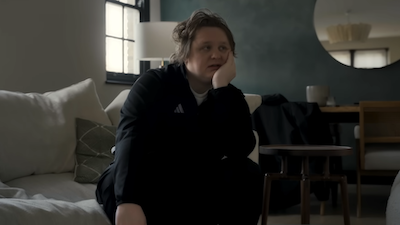
[Video]
[3.25]
Scott Mildenhall: The world still needs X Factor winners’ singles, and specifically Christopher Maloney’s. It cannot be coincidence that “Survive”‘s video contains a clip of Capaldi strumming in front of S Club 7’s “Never Had a Dream Come True.” This is a guy who knows his way from Steve Mac to Graham Stack and the narrative power of a comeback. The formula is timeless but only comes off with precision, and he brings it to bear like a purified James Arthur.
[7]
Nortey Dowuona: The first strands of the guitar riff and piano chords sound flimsy and lightweight, drained of weight and color by EQ or compression, but the notes are pretty, light and easy for any voice to trickle onto. They settle into the simple riff, the chords play underneath, and there is very little to prevent them from seizing the listener’s attention, or from becoming a ballast for Capaldi. Capaldi himself is a surprisingly gentle presence, his rough and hoarse voice slight and softened in his middle register, stepping patiently over each chord without trampling on the flimsy arrangement. Then the song starts.
[1]
Claire Davidson: Lewis Capaldi’s penchant for penning soppy dirges might not seem so adolescent if not for his vocal timbre, which is both cloying and mopey, begging for sentiment while sounding perpetually unconvinced of his own treacle. “Survive” is not as self-pitying as the execrable “Someone You Loved,” but its empty motivational pablum would be just as exasperating if any of its lyrics were distinctive. Then there’s Capaldi’s performance. He attempts to infuse the hook with gravitas by howling his lungs out, audibly straining his vocal chords to reach notes he can barely even hit. This lends “Survive” a paradoxical form of pathos—Capaldi transparently cannot accomplish what he’s so desperate to achieve, yet still does it anyway, and that may be a more convincing argument for the song’s emotional truth than the actual words he’s singing. When paired with the song’s arrangement—a bombastic blend of inflated piano chords and guitar strums that recalls hyper-earnest 2010s balladry—there’s something tragic about this: a portrait of a man in the throes of self-flagellation, attempting to grasp some poignancy at literally any cost to his well-being. You almost want to root for the man’s success, if only in the hopes it would make him stop.
[4]
Tim de Reuse: Other than a vague mention of impostor syndrome, every line pirouettes gracefully away from specifics. Can you make a compelling tune about perseverance and survival without talking about the obstacle that necessitates the song’s existence? I guess that’s Imagine Dragons’s entire shtick, but at least they’ve got a little get-up-and-go in their sound design, and I respect that misplaced ambition more than this difference-splitting. God, Lewis, see how dire this is? Your four-chord all-purpose moaning’s got me pining for “Eyes Closed.“
[4]
Will Adams: What does this remind me of? Snow Patrol? Hoobastank? A viral Facebook video of an abandoned puppy being adopted and rehabilitated? If there were more specifics, I wouldn’t chortle so much at the line “I’m gonna get up and live until the day that I die.”
[3]
Jacob Sujin Kuppermann: Makes the “Roar”-“Brave”-“Fight Song” moment of last decade seem genuinely inspiring; this is dour beyond all comprehension.
[3]
Alfred Soto: Say this for him: the dolefulness is more secondhand than his usual pep.
[3]
Taylor Alatorre: “[Hot Adult Contemporary] is merely the continuation of [the loudness] war by other means.” — Carl von Clausewitz, On War (paraphrased)
[1]
Katherine St. Asaph: At 3:12, Lewis Capaldi showcases the musical equivalent of a Kaizo trap.
[1]
Julian Axelrod: Every time I see an interview with Lewis Capaldi I’m so charmed, and every time I hear one of his songs I’m so bored. Maybe this is how people feel when they’re like “Yeah my buddy works for Lockheed Martin but he’s actually really cool.”
[4]
Andrew Karpan: One of the most “good for him!” records from the entire post-Sheeran pop folk scene.
[3]
Ian Mathers: Proof that it is possible to genuinely appreciate the struggles a song is talking about, truly hope that it helps both its singer and the people that need to hear it, and also never need to hear it again.
[5]