Melody Esme selects one of several songs with the artist’s name in the title – sort of…
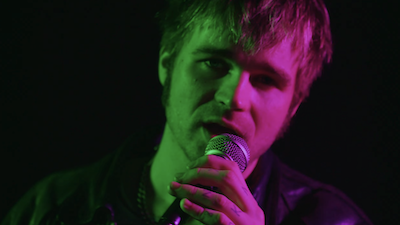
[Video]
[6.00]
[7]
Jacob Sujin Kuppermann: The original version of “Dancing in the Club”, as performed by This is Lorelei, is a ridiculous song. Nate Amos plays the sad clown, the lead actor in a tragicomedy as accompanied by (in his own admission) “Bruce Hornsby-ass piano.” If it were any more coherent, and less committed to its conceit, the song would fail, a limp gesture towards pathetic emotion. MJ Lenderman, in his take of the song, just plays MJ Lenderman.
[5]
Nortey Dowuona: It was a surprise to find that the producer of this song is Brad Cook. For one, Cook’s Bon Iver’s secret weapon, a jack of all trades and a master of a few, and slipped into the role of producer entirely through his own disinterest in solo/band musician dreams and through producing his brother Phil‘s record. Early on, whatever role he was playing in production, it was heavy handed drums, keys that awkwardly jutted over the guitar, the bass dipping in and out of the mix desperately fighting with the kick and snare, the hi hats nearly non existent, a morass and a muddy arrangement. By the time Cook was managing His Golden Messenger, the bass slunk next to, not under, the bass, the brief spurts of guitar enlivened the song, and the hihats and cymbals felt soft and tender in the mix, with Mike Taylor’s raspy voice front and center, comfortably languid amongst his and Cook’s arrangement. Subtlety, creativity, cool, Cook had grown so much in just 2 years, maybe even one! Nate Amos himself constructed the original as a post-Postal Service rehash, neat and earnest, a bit novel. In Cook’s hands, it turns into a bass-heavy country number with pretty, listing piano accompaniment gently on the fringes of the arrangement and Lenderman’s guitar in the center. Amos dutifully plays every other instrument, including the newly added live drums, which originally rushed ahead heedless when simply programmed to emulate the live rush of simple patterns, but which he now plays slowly and syrupy to turn the screws to that cheesy sentiment he has constructed under Cook’s guidance. A direct quote from Cook himself about the ease of his studio setup: “[people] should know that this is available for everybody. The more they’re able to articulate what it is they’re looking for, the better.” One can see this approach in this reconstituted song.
[8]
Jel Bugle: I didn’t get it initially because some Gwen Stefani short on YouTube managed to play simultaneously, and was infiltrating the song with snatches of ‘I’m just a girl’ – once I sorted this out, it was merely a pleasant enough country tinged indie song.
[5]
Al Varela: I really love the layered melodies between the different guitar chords and that little piano in the chorus. MJ Lenderman’s wary, but passionate performance does a lot to uplift the melancholy of this song. It’s the kind of song you walk through the fall leaves to, mind filled with thoughts as you just try and make your way back home.
[8]
Iain Mew: I don’t like MJ Lenderman’s voice any more than last year, but hearing him sing someone else’s words as a chance to turn the ire inwards at least feels much fresher. There is a thoughtful sense of regret that fights through the stodginess.
[5]
Claire Davidson: My issues with MJ Lenderman’s vocal delivery remain as pertinent as ever: on “Dancing in the Club,” he sings as if he’s trying to keep his mouth as closed as possible while still forming coherent words. If this approach was intended to convey his narrator’s bone-deep exhaustion, it fails spectacularly, a result of the total lack of emotion he invests into any of the song’s hangdog turns of phrase. (It also suggests a degree of arrogance, seeing as he was presumably invited by Nate Amos to perform the song for the deluxe edition of Box for Buddy, Box for Star.) This tact also abandons the song’s weary humor, too: I genuinely didn’t realize that the titular refrain involved playing-card wordplay until listening to This is Lorelai’s original. Part of this may be due to how laborious the song is as a listening experience, since Lenderman employs precious little instrumentation variation from verse to chorus, only bothering to pepper the extended hook with overlaid acoustic guitar strumming to differentiate it from the heartland rock basics of its preceding segments. Still, when Lenderman manages to sound stone-faced even while singing a line like, “A loser never wins / And I’m a loser, always been,” I’m left thinking there can only be one true culprit behind the song’s mediocrity.
[4]
Ian Mathers: The original is a peppy, insistent track slightly let down by the overly processed vocals. But there’s still something there. Lenderman arguably slows the backing down a bit too much, and it loses something in the other direction. I still want everything to be twinkling away, contrasting the vocals. Maybe if I took his voice and Nate Amos’s backing I’d get the version that actually lives up to the potential here.
[6]
There is something about this song that is intrinsically early 2000’s, but what that is or why I immediately had that thought, I couldn’t say, and it’s going to bother me for the rest of the day. [6]