Ladies and gentlemen put your hands together for…
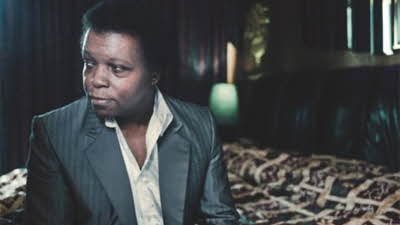
[Video][Website]
[7.25]
Jer Fairall: I prefer Bill Withers’ cover of “Let It Be” to the original. I love Love LOVE Wilson Pickett’s take on “Hey Jude,” a song that, I may as well admit here, I otherwise find tedious and ridiculously protracted. I don’t exactly like Otis Redding’s “Satisfaction” better than the Stones’ version (because “Satisfaction” without Keith’s iconic riff is not really “Satisfaction” at all), but even that’ll do in a pinch. What I’m saying, basically, is that these kind of Soul-with-a-capital-S takes on the unfuckwithables of classic rock are pure catnip to me. It’s not anti-rockist contrarianism, exactly (though maybe a little), but rather an appreciation of economy. As rock and roll spent the latter half of the sixties growing steadily more ornate, these versions testified to the virtues of the basics: a strong vocal, a tight performance, a solid melody. This isn’t closed-minded idealism, but rather a suggestion that the best songs can literally be heard a multitude of ways. Lee Fields’ “Moonlight Mile” doesn’t have the appropriately, elegantly wasted vibe of the Stones’ bleary-eyed original; his reading of “with a head full of snow” sounds like he is comprehending the line as something closer to pathetic fallacy than anything resembling Mick’s likely condition at the time. But the grit of the horns and the warmth of the keyboards have the note-perfect authenticity of anything released by Daptone, the text translates beautifully to this setting and veteran also-ran Fields sings the everloving shit out of it. It’s just pure song.
[10]
Ian Mathers: The Rolling Stones’ version of “Moonlight Mile” has the bones of a good song, but Jagger’s adenoidal performance of it always bugged me. It should go without saying that, whatever Jagger’s virtues as a performer, Lee Fields has a better voice and is a better singer. But those qualities don’t automatically translate to a better version of the song. Thankfully here they do, especially once Fields and the Expressions cut much of the fat from the bloated original and bring in some horns.
[7]
Zach Lyon: I have a weakness. Clean neo-soul takes on old muddy rock classics, I guess. I like the cleanliness. I like how Fields brings out the beauty in that chorus melody and turns it into an even sadder, more desperate oasis in the middle of an ugly addiction song. And how he brings out and exploits the pure latent fear Jagger might not have been aware of when he wrote the song.
[7]
Alfred Soto: As a balladeer Mick Jagger never surpassed “Moonlight Mile” because no other song drew upon the subtle and infuriating gradations with which his contempt turns into desire; on any night except Tuesday he’d blame the sentiments in the chorus on a head full of snow. A piano and Stax-lite horn arrangement ably substitute for Jagger’s acoustic guitar and Paul Buckmeister’s strings, and Fields gives a warm, reassuring performance — but he doesn’t convince me “Moonlight Mile” needs warmth and reassurance.
[5]
Patrick St. Michel: Lee Fields wisely doesn’t mess with the emotional vibe of The Rolling Stones’ “Moonlight Mile.” His take, which allows the sort of space one encounters when they are driving through a rural area late at night, sounds just as lonely but not necessarily sad about it as the original take. He doesn’t screw around with the feeling here, but he adds just a little extra swing to this, something the Stones’ original lacks. Life alone on the road might not always be a blast, but Fields knows it can also be fun.
[8]
Brad Shoup: For those keeping track, Emeli Sandé’s “My Kind of Love” wasn’t a [9]. I’m trying to firm up my soft spot for the trad, doncha know. Fields goes for that laid-back Van thing, intro’d by a literal quiet storm. His voice has held up powerfully well, but this isn’t a showcase, more like a exercise in parallelism. The blinkered hunger of the original gets a bit more sobriety; the distance reduces. The Expressions land on a British big-band motif; my mind boggles at a Magical Mystery Tour-style treatment.
[6]
Sabina Tang: If there’s one silver lining to the zeitgeist-less nature of 21st century musicmaking — and it’s my opinion there are more than one — it’s that a timeless act can be timeless, without so much as a dutiful nod to the nonexistent pop centre. (Assuming they get to record and distribute at all, which is of course the kicker.)
[8]
Jonathan Bogart: Humid Southern soul, the way they made it in the Sixties, with a lyric that could be out of the literary end of that tradition, say an Arthur Alexander or a William Bell. (That’s a compliment to the scribes.) Fields sounds right at home — he should, he was there — and though historically bounded, the sound is one that’s never gone away, if only because white people have to dance to something in movie trailers.
[7]