Everyday robots strut like spies…
[Video][Website]
[7.00]
Patrick St. Michel: “Anti-idol” has been bandied about regarding Puer Kim’s “Manyo Maash,” mainly thanks to perceived shade thrown towards K-pop mega-labels YG and SM. It’s the sort of non-controversy only fanboys could get riled up about, and it distracts from what makes Puer Kim interesting. She’s more of a disruption that manages to slide in perfectly into the contemporary K-pop scene. (Check out her Korean Vowels album for something even better.) “Manyo Massh” has art-school flourishes all over the place, yet it also glides forward and serves as a backdrop for Puer Kim’s fantastic singing. Her music hails from the Shiina Ringo School of Pop, a proud artsy alternative to what’s around her but never intentionally off-putting.
[8]
Josh Langhoff: The first 10 seconds get right to the point: sampled drum intro, syncopated bass groove, foreboding strings, garage power chords. Later there are flute fills. The whole ’60s-soul-and-spy-movies-a-go-go vibe sounds nostalgic for mid-aughts nostalgia, but maybe even flopping around in bell bottoms can feel fresh in the right context.
[5]
Brad Shoup: Thick and probably too thick, with a Hazlewoody array of instruments conjuring a sense of urgent playfulness that her just-there presence can navigate like a lazy river.
[5]
Jessica Doyle: “You hate that you got caught.” Get caught at what? She doesn’t say. She doesn’t need to. It could be adultery. It could be an unwanted thought. Her contempt is complete and all-encompassing. And delicious.
[7]
Daniel Montesinos-Donaghy: Translations aside, how’s this for an opening line: “If I climb on top, while I die?” Kim’s song otherwise is a little too polite in its verses, but the dramatic orchestration and graceful key change are in the same joyous headspace that culminates in Shiina Ringo’s moments of Bond-theme-from-space glory. She has to push her humour further beyond that opening line, though — she’s a little too dry perhaps. The punchline’s nothing without the delivery.
[6]
Anthony Easton: The interesting tension is between the sweetness of the vocals and the astringency of the instrumentation. One tempers the other, and the whole track becomes much more palatable.
[8]
Iain Mew: A mix of understatement and “The Age of the Understatement”, with Kim excelling at the former. She subtly conveys that the fluttery retro grandeur is covering up scars beneath. As cathartic as guitar scratches ripping away the bandages is, it need only happen once because she brings enough quiet menace to carry through the impact.
[8]
Katherine St Asaph: Maybe I’m missing something, but this strikes me as a composite of Jem (sound) and Fame-era Lady Gaga (rebel-in-the-idol-factory fake context), both of whose returns diminished fast.
[6]
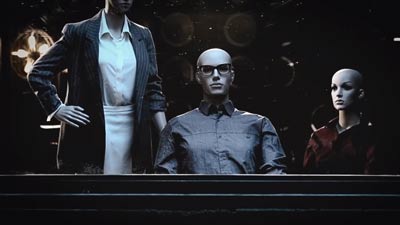
Madeleine Lee: The pop-machine-as-mannequins/voice-as-truth metaphor is trite, but it plays out differently here. In another narrative, the voice that conquers all would be something shattering, so pure and strong it must be real; this is how idol pop, if not most mainstream pop musics nowadays, usually neutralizes its authenticity issues. Instead, Puer Kim’s voice is like the patch cords that wind around her plastic oppressors, sinuous, sly, and deadly. Rather than talent, the intangible that can’t be artificially replicated is cool. The song is built out of familiar material — ’60s pop instrumentation, manipulated string swells — that bends to her voice’s will, a brewing storm around her that sucks up distant brass in its wake. When it comes to a head, it’s not to a glory note, but to one last wail before she disappears in a puff of smoke. The triumphal narrative here is not in conquering the machine, but in having no need for it.
[10]