Maybe they’d like to hang with CL?
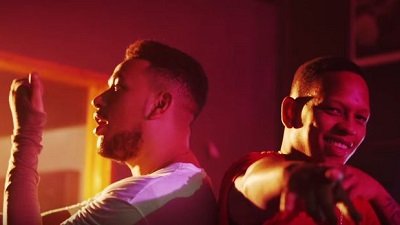
[Video][Website]
[6.83]
Thomas Inskeep: This South African hip-hop dream team is on some srsly hot shit. Bumping a super-synthetic bassline that nearly sounds ripped from a Yarbrough & Peoples record, AKA takes the lead, and each of the guys here tell us why he and his girl are “the baddest team.” But the sum is that AKA, Burna Boy, Khuli Chana, and Yanga themselves are the baddest team: this is the best posse cut I’ve heard in some time.
[8]
Micha Cavaseno: Production is pretty solid and slick, and deceptive in how multi-layered it can be; I almost didn’t catch the Seals & Crofts sample embedded within. As far as appearances go, AKA is a bore with his verses sounding like an adolescent Jay-Z, Yanga is p. chill, Burna’s tone on his hooks and verse is a nice blend of the human rough with the chromed-out smooth, and Khuli’s flow absolutely tears the track the fuck up. “Baddest” is really a jam, its just ironic that the man we’re here for is the least exciting element at play.
[7]
Leonel Manzanares de la Rosa: This guy did the smart thing and released a crew song right after releasing a (perceived) diss track, ’cause you gotta show ’em who’s with you. The bouncy bassline and the dub drumfills make a good combination with AKA’s hooks, but it’s Nigeria’s Burna Boy who outshines everybody in here, even when Yanga made a “Twalatsa” reference in his verse. I still believe the song is a bit too long, and Khuli Chana’s part should have come earlier, but those E-minor pentatonic melodies catch me every time.
[6]
Alfred Soto: The electrobass and finger snaps bear the marks of a Mustard production, but he wouldn’t have added the timbales. It would be Saturday night if a couple of those choruses weren’t so long.
[6]
Scott Mildenhall: Burbling, sauntering, and ceaselessly fluent, this is complete, reciprocal pleasure: indulgent yet inclusive. They’re having so much fun that they draw proceedings out for perhaps slightly too long, but it’s hard to blame them.
[7]
Jonathan Bogart: Future historians of pop will divide their past into Pre- and Post-Auto-Tune eras. Opinions will, naturally, differ on whether the shift represented the next stage in humanity’s glorious evolution or the tragic fall from a state of prelapsarian grace; but more importantly, Auto-Tune will be understood as a synecdoche for the increased globalization and borderlesness of pop. Those whose ears are unable to adapt, who hear Auto-Tune and automatically tune out, will miss the expansive, deeply funky joys of songs like this one.
[7]