Settle up now, please. Call cabs as needs them…
[Video][Website]
[7.75]
Jonathan Bogart: The loudness wars meet Townes Van Zandt.
[6]
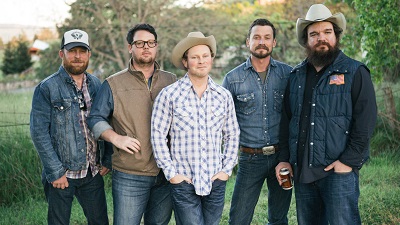
Thomas Inskeep: Befitting a Red Dirt band, Turnpike Troubadours’ self-titled album from this year made the top 5 of the US country, folk, and rock charts. You could call them Americana, I suppose, but that feels lazy. This is country with some Cajun touches (especially in the fiddling), but just as clearly influenced by the Band as by the Kentucky HeadHunters. “The Bird Hunters” is a stately, sad waltz, reminiscing about an old love vis-à-vis bird hunting — really — and it works. Leader Evan Felker’s vocals are affective and affecting, because he clearly believes in what he’s singing (which he wrote himself), and after just one listen, so did I.
[7]
Iain Mew: I’m not even going home at Christmas this year (well, not to my home) and shooting is a long way from my choice of hobby, but I totally get this — falling into the long-familiar with a mix of nostalgia, relief and uneasiness, trying to deal with all the stresses and dramas of a different world by putting them into this one. The song’s fulsome swing and interweaving of the here and there strikes just the right kind of intensity.
[7]
Anthony Easton: There might be too many details here — too many attempts to be writerly, too much work at making it sound like a poignant short story that it might compromise the song itself. But it slides between rock and Americana, and the narrative itself outside the extraneous details is beautiful. All of that said, I am a sucker for any work of art that features rodeo dances. Extra point for the phrase “go on to hell honey, I’m heading home.”
[7]
Rebecca A. Gowns: A gorgeous poem set to song. The story is not just laid on top of a tune, as it happens sometimes; no, the song structure is a part of the poem’s syntax. The first set of verses vamps for a while on setting the scene of the present, then finally releases into the vulnerable, emotional chorus of memory. Thereafter, the chorus serves as a painful refrain, as it would happen in that moment: trekking through the woods, bird hunting with an old friend and an old dog; throughout the day, memories wash over you, then ebb away. The old hurt is uncovered, but along with it comes the joy of having felt love and friendship in the past, and holding onto the ephemeral pieces of them for as long as you can. It leaves me with an ache, a longing, that feeling of having experienced a story well-told and being unable to bring back the moment of hearing it for the first time. To experience such an ache from a piece of music is a rare joy.
[10]
Mo Kim: My favorite thing about this is its warm, chaotic swirl of strings, how they uplift even as they draw blood. The voice is about as collected as anybody is bound to be in the wake of a breakup (which is to say, not at all), but the chorus grounds it, a promise that the pain means something after all.
[7]
Edward Okulicz: The first comparison that sprang into my mind, because I’m not well-versed in the genre, was Old Crow’s “Sweet Amarillo,” which I adore, and I like this a lot too. But the even slower pace and deliberate narrative also spins it into associations with a more universal folk tradition, as well as making it seem even more like a drinking song, and the song about a guy who shot birds reminds me of a song about a guy who, or at least wanted to, catch fish. I could easily appreciate the words as a poem, but I also like the punchy way Evan Felker sings it, like they’d be punchlines or funny anecdotes if he could just get a little more over it. If the song’s a salve for a memory or a broken heart, the strings sting like iodine on the wound.
[8]
Brad Shoup: There’s no feeling quite like losing grip on your burden. The term of art, I think, is welling up, and to feel that grief rise is a precious thing. The fiddles kick up like fanfare at first; the narrator’s tramping across hills on a quail hunt with his friend Danny. “It’s good to be back in this place,” he thinks. But the light fades, and gradually he becomes the hunted. Hounded by his dreams and failures, conjuring reminders from an offhand comment about his grey hair; in trailing his old hunting dog, left behind in a move to Tulsa, doing just fine by the looks of it; in the shock of a shotgun he hasn’t held in years. At first, the blasts sounded like singing; now they’re the echo of future, faraway fireworks. The band’s yowling waltz doesn’t suggest triumph any more. It sounds like good times gone. “If you married that girl, you’d have married her family,” Danny offers, “you dodged a bullet, my friend” — and Evan Felker spits out the word “bullet” like he’s a .444. The standard country wound-licking tune is a performative thing, with pain channeled into extravagant drinking or punching jukebox buttons through the fourth wall. “The Bird Hunters” beats its narrator to shit, but the well has yet to finally burst. He’ll be carrying his failure down the next hill.
[10]