We sure think so…
[Video][Website]
[7.17]
Alex Ostroff: Hey, Calum Scott? Remember when I said that pain aches truer and more beautifully on the dancefloor? Listen to this on loop until it sinks in. (Thorn’s what ifs and regrets and disappointments hit me in a place that’s too real to write about earnestly now.)
[7]
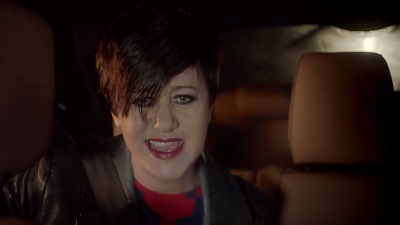
Alfred Soto: She’s blown her pipes, I thought at first. On second listen the newly serrated edges of Tracey Thorn’s voice adds sardonicism to another synthed-up chapter in her ongoing project of limning the quiet lives of men and women who deserve more than they’re getting. “Am I queen or something else I might have been/a star backseat of a blacked-out car?” she sings, as usual keeping her head while others lose theirs.
[8]
Micha Cavaseno: There’s a strain of age on “Queen,” but it doesn’t sound weathered or like any notion of “grit.” Instead, it’s the slight lean and stretch of lacking juice, that slight warp from a draining battery rather than the distortion of technological grain. Tracey Thorn’s voice has more character in its defeated qualities than any sort of valiant victory — not so much tragic, but retiring and wilted. You get the sense of someone who’s well past their so-called glory days, but rather than insist that they have more to say, resigns themselves to allow more from their smoldering moments.
[6]
Tim de Reuse: The synth backdrop is unsatisfying, calling back to years of cheap digital synthesizers and anemic drum samples with a bit too much gusto, and it struggles to match the force behind Thorn’s voice. Not all the melodies work perfectly — some are far too heavy-handed and predictable — but the unresolved theme behind the unanswered “do I ever find love?” soars every time.
[6]
Katherine St Asaph: “Queen” is an entirely different song depending on whether you think she has found love, and is marveling at the million tiny ways the world could have changed to prevent that (and a different song still if the thought makes her terrified, not awed), or if she hasn’t, and is scouring the past for the mistake. I think she means the former, but the song sounding exactly like “Thank God It’s Not Christmas” (“great things to say or do / aren’t done by you / obviously”) tips it back toward the latter for me. A piece of music writing, really writing-writing, that I think about a lot is the Jukebox’s Erika, in the comments of Lily Allen’s “22“: “At 22 you could have been anything, but at 26 you now are something. And something is a lot more limited than anything…. Like, when you started reading Gawker, you were 20 years old, and the authors and the whiz kids that everybody was buzzing about were a few years older than you, you looked at them and you thought, psh, you could write a novel as good as that in the next few years. You’d have them beat. And at 22 you were still reading Gawker, and the ones everyone was buzzing about were the same age as you…. And as time passes, 22 starts to look like the border of your ability to accomplish something, and be special for it, and you know you’ve crossed that border and are walking farther and farther away every day, and if you don’t have an amazing career by now then what is there left to do? What is there left to look forward to? Maybe you can still fall in love. Maybe you can still get married. Maybe you need to go out and meet as many people as you can.” And now it’s 2018, no one’s reading Gawker because it’s been demolished by a comic-book billionaire, and so many people I know feel as if the world’s been kicked out from beneath them. It’s not the political climate — though that certainly doesn’t help — but the sense that their life suddenly happened and then unhappened. Everyone describes it differently, but they all independently come up with Hollywood terms: dying sitcoms, ex-child stars, the US version of royalty. Sometimes I imagine that myself-from-my-old-life is still out there, “Evil Doppelgangers“-style, younger, in a much glitzier locale, with more to say to more people. Is she queen? Does she ever find love? Whose odds are better, hers or mine? “Might have been” is a lot less limited than “is.”
[8]
Thomas Inskeep: Ewan Pearson provides Tracey Thorn with a driving beat and high-BPM synthpop backing; Thorn provides an impeccably written song and her always-awesome vocals. Love the way she’s using her lower register on this. Damned right she’s a queen.
[8]