Stop telephoning me-eh-eh-eh-eh-eh-eh-eh-eh…
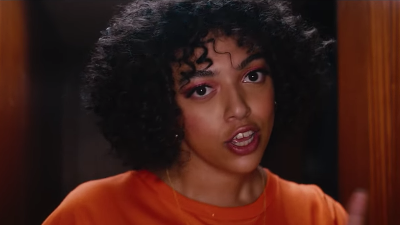
[Video]
[5.62]
Rebecca A. Gowns: “Do Not Disturb” is a romantic ode to a phone setting. “Hold the line” and “tempting me with your alerts” are phrases that become multi-layered; she’s talking to the love interest about their in-person behavior, and she’s talking about how they need to mediate their communication through their phones, and she’s talking to the phone itself. I’m with you, Mahalia — every time I toggle my phone’s “do not disturb” setting back into “disturb” mode, I regret it. Should’ve never let you in, and now here I am having wasted half the day checking notifications. This song is an excellent testament to building stronger boundaries with other people, and using whatever means necessary, no matter how small, to fortify one’s own weak discipline.
[9]
Joshua Minsoo Kim: Based off the single art and the instrumentation, it sounds like Mahalia’s sold out (she hasn’t, obviously). Listening to the song, you hear her knack for writing exquisite toplines: ones that find ways to rhyme words in straightforward but impressively sticky ways. On “I Wish I Missed My Ex,” it was how she fit in the “talk about you need closure.” Here, it’s the pairing of “deserve” and “alerts.” But honestly, you can’t make a song about putting your phone on Do Not Disturb and then also mention the Do Not Disturb sign you’re (not actually) putting on your door. Commit to your ideas, c’mon.
[3]
Thomas Inskeep: I loved her last single, but this feels much more limp, even with some crisp production. Both Mahalia’s vocal and the song’s lyric are trying too hard.
[4]
Julian Axelrod: Not terribly exciting by Mahalia’s standards, but this captures the omnipresence of technology in modern romance better than most pop songs. So it’s doubly confusing that the titular conceit feels like it was written by a dude in his 50s.
[6]
Alfred Soto: Worried, overgarnished dance pop: the scratches, backward vocals distract. But perhaps on the radio these gewgaws will act as the distractions keeping Mahalia from concentrating on her own self.
[6]
Iris Xie: This is absolutely the sequel to “All the Stars,” and should probably be the next ending credits song for Black Panther 2. “Do Not Disturb” is a cousin with its mildly dark, echoey sound and its usage of water drops, violin synths, and a muffled piano chord. This is paired with a good, if well-worn concept; who doesn’t relate to putting your phone on Do Not Disturb? The lyrics favor a roasting, maximalist approach to explore every single possible metaphor of what putting someone on Do Not Disturb could convey, resulting in a forced outro that seems stilted and out of place. Execution aside, this construction of elements usually pleases me, but the key component, Mahalia, seems null here. Her delivery seems flat and strained for such a glossy, strife-filled song, and it forces a sense of dissonance in me while listening to it, and gives me a feeling of concern because she sounds like she is struggling to keep up with the song and that this might not quite be her speed. Mahalia’s music always expressed a lo-fi vibe to me that sounded unique to her, especially with “I Wish I Missed My Ex,” where it sounded aglow in its neighborly vibe, and just sharing a story about how it’s not a diss, but she just wished she cared more about her ex. Here, Mahalia sounds like she’s trapped in a studio-approved vacuum sealed bag of inoffensive dark-lite R&B, or maybe the leftovers from Ella Mai’s first two EPs, or a The Weeknd song with all the evil extracted from it. It’s anonymous, brooding, and mysterious in the wrong way, but good for a mindless drive when you need a backdrop for your thoughts, but you need to change the song half-way through because it’s starting to interrupt you.
[4]
Iain Mew: I love the moment when “I let you ring” is accompanied by a piano flourish like a super fancy notification/ringtone/video game accomplishment chime. The rest of the song takes the same general tone but doesn’t have the eye for detail to achieve that kind of spark. As the source of the do not disturb shifts loosely between Mahalia, phone and room door, it’s less the exploration of an idea and more narrative confusion.
[5]
Ian Mathers: Veers pretty close to being either a full ballad or a full banger at times, but walks the mid-tempo path between in a very satisfying way, arguably as satisfying at the thought of delivering the song’s message to that one person who deserves it is, in the imagination at least. In the grand, proud lineage of “do not talk to me” songs, this one acquits itself well.
[8]