He was thinking about Alicia Keys F. Kennedy…
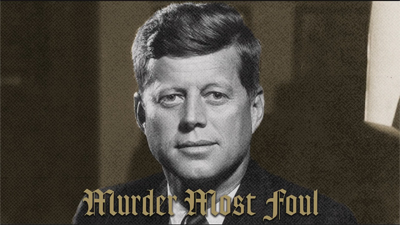
[Video][Website]
[5.50]
Kylo Nocom: Man, who cares about the damn conspiracy theories, I like poetry!
[8]
David Moore: Thank god for Raffi.
[1]
Alfred Soto: Mindful that grateful boomers turned their scared eyes to him on 9-11, Bob Dylan vamps, over a piano line that shimmers like sunlight on a creek, about “Ferry Cross the Mersey” and A Nightmare On Elm Street and mumble-garbles excerpts from Macbeth and the slain JFK’s speeches. To make sure we’re still listening he tosses in lines like, “I’m just a patsy like Patsy Cline.” He’s still not there, still irreverent — still irrelevant if seventeen minutes of okay-boomering appalls.
[7]
Katie Gill: You know how there’s a joke about a teacher taking “We Didn’t Start The Fire” or “It’s The End of the World As We Know It” and telling their class to pick a reference and write a paper about it? This feels like a less fun version of that assignment. There’s potential here: those backing strings and piano intersect in ways that are absolutely gorgeous. And every now and then, there’s a beautiful nugget of a lyric that shows you why Bob Dylan is the acclaimed songwriter people recognize him as. But he’s an acclaimed songwriter. Not an acclaimed singer. If you removed the vocal tracks, this wouldn’t get on a lo-fi hip-hop radio, beats to relax or study to, but it would certainly make its way onto an instrumental 8tracks of study music. And really, the indulgently long runtime and lyrics which start as seemingly gratuitous references but devolve into an indulgent trip into Dylan’s metaphorical Spotify playlist take something potentially interesting, stretch it out a bit too long, before a tacked-on and completely overwrought five minutes at the end. tl;dr, JFK, blown away, what else do I have to say?
[3]
Ian Mathers: I only got about 18 seconds in before my first “Bob Dylan retire challenge” moment. It was not my last.
[3]
Oliver Maier: The best long, meandering, spoken word banger with no drums since René.
[7]
Thomas Inskeep: Dylan at his most Dylanesque, doing a 17-minute spoken-word recitation about JFK’s assassination, with accompaniment largely from piano and cello. It works, because it’s so Dylan. No one else could pull this off quite like this.
[7]
Alex Clifton: This does sound like a spoken-word poem backed by a small band on a coffeeshop stage during winter, and I want to stress that’s actually kind of ideal for a song like this. Dylan sounds much better than I expected — he’s never been a strong singer, so this sort of melodic speak-singing works in his favour, even if about 30% of the words are slurred. In addition, it allows for a spotlight on the poetry of the piece: Dylan’s lyrics are famously dense and poetic, occasionally meandering, but for a piece that examines the last sixty years of American culture, it fits the mood. It does feel odd to listen to a seventeen-minute single in an era when last year’s biggest single just passed two-and-a-half minutes, but then again we’re living through an absolutely unprecedented time. We’ve finally got the time to really take a good, long listen, soak up the entirety of the song, devour and analyze it slowly — the antithesis of a culture that demands immediacy and speed. When we do get to listen, it’s intimate and haunting, quite unlike anything I’ve heard in recent years. Dylan’s always known how to make a story unfurl, a skill only a few songwriters have. Sounds like he’s putting it to good use here.
[8]