Not the last posthumous song we’ve got on the schedule…
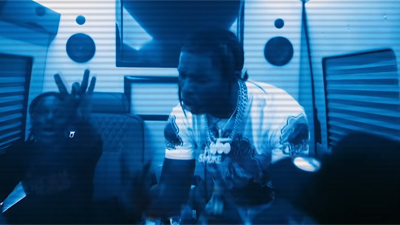
[Video]
[4.67]
Jacob Sujin Kuppermann: A strange bridge of a single– beyond even the standard oddities of posthumous work (check out that ungodly key change for Pop’s verse!), “The Woo” feels like a hodgepodge, crossing generations and regional divides (to the extent that Roddy Ricch is still a regional West Coast star) with little success. The problem perhaps lies in the precise combination of artists– while 50 and Pop are low-key and confident in their bravado, Roddy is electric, almost too energetic.
[4]
Joshua Minsoo Kim: There are about three different parts of this song that would function as a decent sound bite for TikTok, but as a whole this is disjointed and confusing. Starting with Roddy Ricch only makes 50 Cent and Pop Smoke sound lethargic.
[5]
Katherine St Asaph: A decent recreation of a late-’90s Kandi/She’kspere guitar loop, subjected to a series of unfortunate verses (and off keys?).
[2]
Will Adams: The Spanish guitar and the presence of 50 helps evoke the early-aughts vibe — something like “03 Bonnie and Clyde,” perhaps — that I’m predisposed to adoring from many a ride to school with B96 on the air. The sudden key change — announced via a “Candy Shop” quote — is interesting, but the fact that it was done for Pop Smoke’s posthumous verse feels strange.
[5]
Alfred Soto: Fiddy’s presence reminds listeners that the late Pop Smoke was five when “Candy Shop” topped the Billboard Hot 100. The flamenco loop reminds listeners of the 1999-2001 interzone when these samples suggested exoticism. Roddy Ricch is here to remind listeners that his was the most fully realized talent.
[5]
Oliver Maier: Sinuous and detailed enough to avoid feeling like another paper-thin Latin trap hit, or a tossed-off epitaph. There is something potent in the structure here, the way Pop’s chorus heralds him like a shadow dancing along the walls, making Roddy and 50’s braggadocious verses feel genuinely cinematic (even when the latter rhymes “dick” with “dick”). When he materialises for a verse proper, the key moves down several notches to accommodate him; perhaps implemented as a way of sticking a verse and chorus from two different sessions together, the effect is nonetheless compelling, as if demonstrating Pop’s own gravitational pull.
[7]