Next up, a Montreal group whose song title I still don’t know the meaning of…
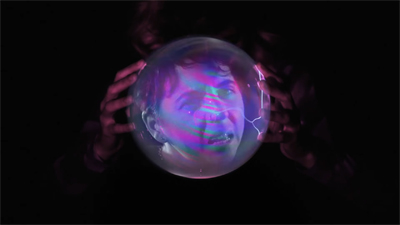
[Video]
[6.11]
Katherine St Asaph: A pop anthem from the same subconscious yearning place of PVRIS’s “Death of Me,” Digital Daggers’ “Can’t Sleep, Can’t Breathe,” Katy B’s “5 AM,” Goldfrapp’s “Thea,” The Birthday Anthem’s “Superstition,” and so many other [9]-plus tracks — yet none of those capture this particular seductive death drive as well as “live in the tension.” “N.Y.P.” is deceptively simple in structure: two repeating vocal melodies, one synth counterpoint, some backing-vox echoes. Its build is subtle, but it’s there: chords gathering like choreographed clouds (the haze lifting for the first “tension” is perfectly timed), those Italians Do It Better synth flickers two-thirds in, the bass engine that, whether in or out of focus, holds steady, like the implacable push forward into of bad decisions. Everything is visceral drama and nothing is chill, including — crucially, refreshingly — the vocal. Michelle Bensimon’s voice is so exquisitely crystalline and piercing, a glass splinter, and creates one of the year’s best moments of music. The last sung line, if transcribed as sheet music, would be exactly the same as the rest. But Bensimon changes the vowel she’d previously been singing to the more open, full-throated anim-ahh-ls, and on her last note, just barely perceptibly, she doubles the octave. The changes are tiny, but the effect is shattering; the swoon becomes rent sky.
[9]
Will Adams: The gleaming centerpiece of an otherwise straightforward pop-rock album, “N.Y.P.” swirls with the same tension of other songs about desire and possession but set to space-odyssey synths and disco grooves. In a masterful execution of the same-verse-same-chorus melody trick, Michelle Bensimon bends her voice to add dynamism so, by the song’s end, that desire has gone from a warble to a howl to a roar.
[8]
Thomas Inskeep: This is just another generic midtempo indie-pop song, but the singer’s voice is so shrill and piercing it makes my ears hurt.
[1]
Ian Mathers: On the one hand, there doesn’t seem to be much more to this one than that endlessly soaring keen. On the other, when they work that keen this hard and this successfully, does there need to be?
[7]
Alfred Soto: An impressive and plaintive display of vocal and synthesizer sustain, “N.Y.P.” should’ve taken longer than 3:10 to climax, for which Michelle Bensimon’s control deserves most of the credit.
[7]
Juana Giaimo: From the first seconds of “N.Y.P.” (so mysterious! so sensual!), I was intrigued to hear how the song would continue, but I was deeply disappointed to find that they just repeat the same melody again and again.
[5]
Tim de Reuse: The vocal melody is two repeated lines, unchanging, the chorus is a single riff repeated over a static two-chord loop, and there’s little in the vein of tonal resolution or dynamic variation. A song that revolves around a single drawn-out moment like this lives and dies on texture and detail; unfortunately, the instrumental is unremarkable synthpop, and all subtleties in the soaring vocal performance are drowned out by numbing reverb.
[5]
Dede Akolo: The vocals soar with the strength and quality of 2010’s La Roux of “Bulletproof” fame. The synths, however, are much more subdued and delicate than anything in the Top 40 in 2010. Good shopping music.
[5]
Austin Nguyen: According to Caveboy, “‘N.Y.P.’ is about possession and greed. It’s the dark feelings you don’t want to talk about that pull you in and give you pleasure. The pleasure in the pain.” Which is just a veiled way of summoning the queer calling card: kink. Not classic (codeword for “determined by cishetero white men”), reliable, factory setting vanilla sex, but sex built on the chaos and danger of collapsing (false) dichotomies of separation into sameness: “bloodshot and torture,” “relinquish all control,” “hunted like animals.” Few poets can capture the “tension” and viscerality of, for lack of a better term, sexual deviance (no coincidence: the only ones that come to mind — Ocean Vuong and Juliana Huxtable — are queer), but Caveboy doesn’t shy away from any aspect. There are “gen” Grindr exchanges in “spending our money’s worth / on something so selfish,” insistent on-the-bed come-ons in “push me harder” (the most Big Bottom Energy any artist has radiated since “Bloom”), popper highs (or what I imagine them to feel like) in the synth washes. It’s messy and frictional, reverb-boundless vocals against crisp percussion, and the ambiguity of the title follows: What even is N.Y.P., assuming N = Name and Y = Your? Does P = Poison? Position? Pleasure? Pain? Why just one, Caveboy seems to ask; why not all?
[8]