Oh, we did.
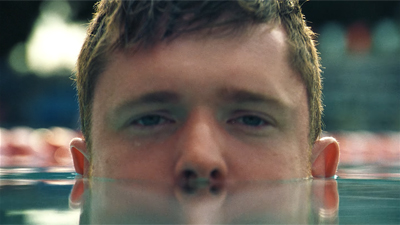
[Video]
[2.78]
Thomas Inskeep: Why so glum, chum?
[2]
Andrew Karpan: A sort of absurd performance of self-pity, the length the record goes to find the outer limits of bitterness only reveals how repetitive and unsatisfying the feeling really is. Fittingly drifty and minimal at every end, loaded with backing vocals that slosh like waves from a grey ocean that will never end, this makes the song an educational experience, if not a satisfying one, committing to tape an evening of some truly bad vibes.
[2]
Oliver Maier: The mopey self-pity at the centre of Blake’s work is unchanged from a decade ago. The main issue is that he’s jettisoned the meticulousness that made for a worthwhile synthesis of form and content; there was, back then, in the stuttering drum loops and effects-laden vocals, the sense of a neurotic young man trying to rearrange and rewire his own brain to gain some kind of self-understanding. So when “Say What You Will” tries to probe similar insecurities through a tedious soul pantomime, it not only doesn’t land but actively grates. There is of course the unavoidable fact that it is tiresome to hear an incredibly rich and famous person pat himself on the back for pretending that he doesn’t care that some people don’t like him, but this would be expensive-sounding schlock regardless of the source.
[2]
Harlan Talib Ockey: I genuinely wasn’t sure if this song was meant sincerely until the Teddy Roosevelt quote popped up at the end of the music video. “Comparison is the thief of joy” is an important idea, but “Say What You Will” is so woefully underdeveloped that what should be self-acceptance just sounds like the narrator zoning out at 2 AM. The chorus never advances beyond the titular phrase, and the production never reaches relief or catharsis. It’s an effective showcase for Blake’s ethereal higher register, but not much else.
[3]
Juana Giaimo: I could never feel the emotions James Blake’s wakes up in other people, so you can imagine that hearing his weirdly trembling falsetto in the middle of a rather boring song didn’t make it for me.
[4]
Ian Mathers: Blake’s framed this as a song about acceptance and realization, but it sure feels like a howl of pain sometimes? Whether you think that vocal showcase near the end is lovely or showy, nothing about his really reads tonally like it jibes with the content of the lyrics. Which isn’t a criticism, necessarily; a lot of work can be done with that tension. It’s just that most of this one creeps along at a mumble, so that it’s only when he risks being ridiculous that it attains anything really interesting.
[6]
Edward Okulicz: There is a logical fallacy that immature boys and people who are bad at thinking use when arguing on the Internet about the worth of musicians, actors, sports stars that I like to call argumentum ab amicam, or argument from girlfriend. That is, because person X has an attractive girlfriend, he must be good. I may be commiting a logical fallacy of my own by wondering what on earth the wonderful Jameela Jamil sees in this man.
[0]
Anna Katrina Lockwood: Is James Blake simply not that great of a songwriter? He came to fame on the back of two popular singles, both covers. He does good production work, and some great guest spots, but his own material tends to come across as just substrate for his voice. The notes that hit here are clever arrangement moments — he really is a wonderful manipulator of his own voice — but I’m just not convinced there’s a whole lot of actual song here. It has both the staying power and structural integrity of an ice cream cake under the summer sun.
[5]
Alfred Soto: It takes talent to assemble beats, well-behaved synth washes, and dolorous monotone into a a declaration of self-pity this one-dimensional. Some artists exist as sampling fodder for others (aka the Spandau Ballet Dictum). Here’s hoping Beyonce still sees hope in James Blake.
[1]