Your friendly reminder that it’s almost Father’s Day in Estonia.
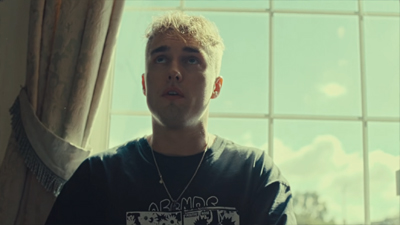
[Video][Website]
[6.70]
Claire Biddles: Sorry Sam, but “Spit of You” represents two things I am unable to engage with: the 2021 mouth-full-of-beans male vocal style, and any content about dads.
[2]
Edward Okulicz: Relatable and gentle, this tells a story I can relate to with a deft touch. The saxophone, which may not be intended to be a metaphor for an outpouring of emotions long waited for, but feels like it, is a little gauche, but I like saxophones so it doesn’t bother me. I like so much about this song but somehow it only really seems powerful when I start thinking about the parallels between Sam’s relationship with his father and mine with my own. When I don’t grab onto music and message with both hands, and just let it wash over me, my gut instinct is just that it’s nice. I don’t know whose fault that is.
[7]
Iain Mew: “I can talk to anyone. I can’t talk to you”. No prepositions, just two solid slabs of fact stuck there in juxtaposition, and all the more powerful for it. The music never quite lives up to that starkness, but the increasing jet engine roar throughout does serviceably at heightening effect, even if the sax is A Bit Much.
[7]
Andy Hutchins: The economy and deftness of the words would be breathtaking even if the medium were not masterfully carrying the message, the striding drums and searching guitars going so loud that Fender has to go bigger to only be a part of the mix. And then: The sax, mourning, soaring. Ran like a tap, indeed.
[10]
Mark Sinker: The tormented human centipede of inarticulate dadfeels is something I would ordinarily hugely side-eye, at least as central topic of focus. Sam F is pretty good at it though, and I laughed out loud at his choice of videostar. Needs more fake instruments though.
[5]
Ian Mathers: So is this thing a concept album, or at least a narrative one? Because this certainly fits rather neatly with “Seventeen Going Under”, but I can’t decide if this one doesn’t hit me as hard (even though it shares several of the other song’s virtues) just because it’s less effective as a song, or if it’s because it feels like one of those songs you have on this kind of album where it’s sort of narratively or structurally necessary rather than a standout in and of itself. Or maybe it’s even just that it feels more in the middle of the moment, the emotion, the damage than “Seventeen Going Under” and sometimes we don’t actually really feel the weight of these things until and unless we get the time and distance to articulate them to ourselves and others.
[7]
Andrew Karpan: Fender’s songs are containers where single ideas fit well; grown-up sadboy ideas that he builds up with such momentousness that it’s easy to forget how small and slight is the energy that rattles inside its core. “Spit of You” takes one of these ideas — feeling awkward around his father — and blows it up into a fist-pumping exercise that can be stretched out easily into being about feeling awk anywhere — I was moved strangely by a TikTok that used the record to make a joke about therapists. From the ashes of post-Bruce anthemics perhaps comes the future of rock music. Or, whatever, never mind.
[5]
Alfred Soto: The drum sound is bold, the guitars jangle like primo Gin Blossoms, and his confessions stately not whiny. But I read the title and sing it to the tune of “A Case of You.”
[7]
Nortey Dowuona: The drums on this are the first thing I like. Without them, it’s just a blurry mix of smushy bass and cast off guitars. But with those drums, the song begins to sizzle and cook, as Sam softly murmurs below, then firmly intones that he can talk to anyone, but the one he’s put this song on for, he can’t. And slowly, he begins to come into focus, firmly intoning, then fades away, letting the drums carry the blurry, foamy mix, then reappearing, his voice soaring and howling, leading a saxophone peek out, timidly at first, then slowly more confidently, slowly lifting higher with the drums strolling gently below it. The guitars float away, softer and softer….
[8]
Will Adams: I used to not be able to see it. Growing up, friends and family would fawn over me as if I were his spitting image. My mop of thick red curls and pale, freckled skin in contrast to his deep brown, just-graying hair and even complexion? It didn’t make sense. A few years ago, I came across an old photo of him, and it finally clicked. That’s me. It almost unnerved me to finally see what everyone was talking about, like some obvious truth I was blind to, and to contemplate why I resisted the comparisons. I am now about the same age as he was in the photo; the similarities have only grown deeper. The ship captain with the even keel. The noble peacekeeper at the dinner table. The determined man who sees problems as an issue to resolve internally, and therefore keeps them inside. This is no clearer than in the situations where we are one-on-one. How quiet the air gets. That silence is when my mind starts to wonder. I wonder what his relationship was like with his own father (he died in ’97; I can’t even remember his voice). I wonder if he’s thinking what I am: What are we unable to say right now? I wonder if he’s proud. There’s a tacit understanding that we love each other, and that love is obvious enough that it doesn’t need explicit expression. As we get older, I wonder when it’ll have to be said. It might come when he inevitably has to say goodbye to his mother. I wonder about that moment. I wonder if it will demonstrate what will happen when I inevitably have to say goodbye to him. I wonder how hard it’s going to hit me. I wonder about what will still be left unsaid. I should call him tomorrow.
[9]