Every press release I found for this felt genuinely mean to quote, so let’s just go with our internal bio: Grace is an artist who just got her first UK top 40 hit and has a distinctive approach to singing.
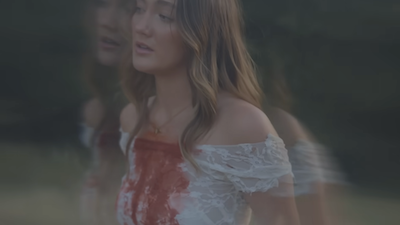
[Video]
[3.91]
Iain Mew: Sometimes, when a singer is really baring their emotions, there is a moment when their voice breaks and they depart from the melody. It’s often a highlight of the song. Alyssa Grace noticed this, and had a thought: with such a powerful technique available, why only use it once or twice? Why not put it into every single line, until any melody is pretty much theoretical, exponentially enhancing the emotional force of the song? The result made for the most viscerally unpleasant first listen of any song in the UK top 40 this year, but it’s at least kind of fascinating. “Bloodstream” is maybe the most hyperpop song anyone has played with mostly just an acoustic guitar.
[2]
Katherine St. Asaph: turning a big dial taht says “Quirk” on it and constantly looking back at the vocal producer for approval like a contestant on the price is right
[5]
Claire Davidson: Alyssa Grace, sounding every bit her 18 years of age, renders her verses with the whipsaw misery of Best Actress Oscar reels, oscillating from compassion to condemnation as she attempts to see the good in her likely violent partner—someone she admits she finds alluring because of how much his behavior resembles her father’s. There would be a compelling, if morbid, thread to needle here if Grace didn’t forego introspection in favor of playing to the cheap seats, emphatically forcing a vocal crack in nearly every line of the song. Her affectation is almost perversely funny; I had to listen to “Bloodstream” three times before I could properly ascertain its lyrics, such is the degree to which Grace’s delivery calls to mind open-mouthed bawling. Add to that the shambolic lyrical meter, and the whole track sounds like a frenzied demo take, the kind of thing an artist records exclusively for catharsis, never intending to release it to the public. That producer Steven Martinez attempted to add bombast to this by pairing the chorus with inflated kick drums just feels cruel, as if he were mocking his own client’s material.
[3]
Nortey Dowuona: “I had all these co-writes set up, but absolutely no ideas. I don’t know, I think I had just had an off week the week beforehand- so I ended up flying to Nashville with nothing. So my plane lands, and I call an Uber to my first co-write. I can’t show up to this co-write empty handed, so I’m desperately thinking of ideas, concepts, anything worth potentially writing a song about in the car. So finally it hits me…what about the car I’m in right now…Uber?? I actually brought the idea up at the co-write and it was turned down…fast forward a few months, I find the idea in my notebook and write the song in a half hour. Made a demo for it in two hours, which ended up being the final record. It was a quick one.” – Steven Martinez, who also co-wrote this masterpiece. Alyssa sounds amazing too!
[10]
Alfred Soto: Goodness — is her voice cracking on purpose? Hearing the serviceable songwriting is difficult enough. I’m inclined to show clemency, but oof.
[3]
Jacob Sujin Kuppermann: It feels wrong to pan this after I gave “iloveitiloveitloveit,” which is largely the same song, an [8] two months ago. But this is more overwrought and less funny; a maudlin pileup of cliches delivered in an unconscionable drawl.
[2]
Ian Mathers: I should probably take Reddit off of my phone. I was pretty good at not aimlessly scrolling before I had it, and it’s intensely depressing just how much the lyrical content here reminds me of hundreds of posts to r/GirlDinnerDiaries and others, where the advice (correctly) given can be boiled down to “this is unacceptable you should leave if you can.” That part of “Bloodstream” sits very uneasily with the… unusual vocal styling. I am aware that Grace is a teenager, and who knows how her writing and singing might change with experience and age, but it feels like the performance is trying for authenticity and emotional intensity by running away from the obvious smoothness of autotune and other tech via something more “messy” and “human,” and it registers like it’s just kind of sliding in and out of tune. On first encounter it sounds more awkward than effective, but if it catches on, who knows?
[4]
Josh Winters: There’s an undeniable bravery in putting this kind of intimate generational hurt into print. The songwriting itself doesn’t blink. But while the lyrics lay everything bare, the vocal performance retreats into a protective shell, adopting a hyper-stylized affectation that ultimately keeps the listener at arm’s length. When a narrative is this fragile, every rounded vowel and breathy cadence can inadvertently dull the sharpest edges of the truth. It creates a frustrating distance; the words are begging for an unvarnished human anchor, but the delivery feels tied to a specific aesthetic trend.
[4]
Andrew Karpan: Heavy, like the lighting on a Netflix limited series. “Bloodstream” feels like a diary entry come to life, written by that ink pen that lights things on fire. Big stuff, dark conversations, very real. I’m buying it. It helps that Grace sings with a voice that sounds inconsolably weary, warbling in a slightly, almost midwestern lilt despite its LA origins: something she says she discovered on this latest batch of records, after a since-deleted first start starting off singing songs about “Identity and Mental Health” in the early pandemic era. “Last summer when I was getting out of a relationship, I was writing very soft toned songs. Like Phoebe Bridgers,” she recently told a blog, before saying she was more into Noah Kahan now. That makes sense. The promise of Noah Kahan is that feeling something matters; hopefully fans stick with angst and heartbreak and not, umm, incontinence.
[5]
Taylor Alatorre: This was shaping up to be a pretty little bout of post-teenage bloodletting, before it started creaking under its own affected weight. The title sets the stage for a potentially devastating connection with the otherwise clichéd “father’s daughter” line, but this potential goes maddeningly unrealized, lost as Alyssa Grace is in her bramble of half-completed metaphors. The demands of viral stardom lead Grace to pack an album’s worth of thoughts into one whirlwind confessional, which on one level is understandable. If every song could be your introduction to the masses, then every song has to be fully and completely you, with no room for filler or off-center whimsy. Except in real life this isn’t the case, and Grace would be served better, artistically if not commercially, by developing a songwriting identity that’s strong and discrete enough to be enjoyed in small chunks, rather than gulped down all at once like Mr. Krabs’ pill.
[3]
Al Varela: The monkey’s paw in romanticizing the idea of nobodies in their bedroom being able to have huge viral hits if they just keep working hard, making songs and spreading them far and wide, is that a lot of these kids are simply not ready to be public-facing musicians. I’m sure Alyssa Grace is a nice kid, but her singing is awful: constant voice cracks stumbling through a messy chorus with no direction or foundation. The constant emphasis on her “raw emotions” is forced, as if she’s under the impression that the more untethered and emotional her performance, the more intense and powerful the song becomes. But even emotional singers like Olivia Rodrigo know not to overdo it and to save those moments for when it counts. There’s some potential lyrically, but nothing in the production or Alyssa’s performance comes together. At least there’s nowhere to go for her than up?
[2]
note to copyeditors (me): typo accurately reproduced from original tweet