We’d say it’s Jack Antonoff day, but really, what day isn’t…
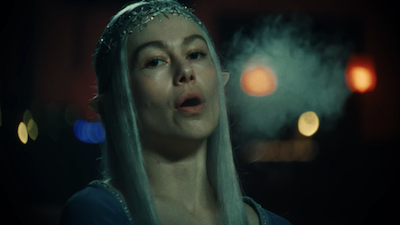
[Video]
[6.85]
Julian Axelrod: The last time Phoebe Bridgers invoked the wrath of every manchild on the internet, she was smashing a guitar on Saturday Night Live and destroying the sanctity of rock itself. Now, as she stands on the verge of a comeback, she inverts another iconic defiled guitar slogan: “This machine is killing me.” She acknowledges her reluctance to return the spotlight and the role of her (often insufferable) (sorry!) fans in her long absence, the kind that requires Yondr pouches and social media scrubs. But on the other side of that rage against the machine is a lovely, melancholic ode to should-have-been-lost youth and the beauty of stunted people finding each other. She shows why a thousand imitators can’t write a Phoebe Bridgers song quite like her, spinning in a storm of horns and cymbals. You can barely hear the guitar.
[7]
Al Varela: There’s a lightness to “Lost Boys” that really draws me in. Phoebe Bridgers gets a sea of voices to sing with her about the lost boys who look like they’ve figured it all out, but are really running away from an ever encroaching fate that will consume them whole. Yet Phoebe finds herself drawn to them anyway, even knowing how it’s gonna end. There’s as much whimsy in the song as there is tragedy — it’s romanticizing the path to nowhere. But the twinge of empathy and understanding Phoebe has for these men gives the song its power. It helps that she created a killer chorus for it, one that really hits hardest after the fakeout ending into four-count.
[9]
Claire Davidson: Why Phoebe Bridgers has become one of the most celebrated artists of the decade continues to mystify me. When I look at the arc of her career, I can easily see how she’s amassed such fervor: a co-sign from Ryan Adams at a young age that she’s fortunately escaped; a series of collaborations with respected songwriters following her first album; and a cannily timed formation of a supergroup with brooding indie rockers who just so happen to share her devoted queer fanbase. Yet the underlying acclaim that’s provided her with Grammy hauls has just never made sense to me. Bridgers has made a couple of songs I can admit to truly loving, but by and large, I find her material bloodless, characterized by anemic arrangements, mundanely specific lyrics, and the kind of hazy vocal delivery that makes one tired just by listening to it, as if she found a way to transmit the psychological effect of yawning through sound alone. Still, it’s been six years since Bridgers has released a full solo album, so I knew its lead single would at least attempt to sate its audience’s anticipation through grandiosity. “Lost Boys” is an uptempo track in the vein of “Motion Sickness” or “Kyoto,” not so much triumphant as casually sardonic — an ironic posture that undermines the more direct energy that a pop framework could provide. That’s all the more frustrating given that hedonism is built into the subject matter: Bridgers analyzes her attraction to men whose recklessness she finds both exasperating and endearing, as they provide her with a vessel for wish fulfillment that allows her to escape her grown-up woes. If nothing else, the singalong hook and its arsenal of winning trumpets have considerable charm—or, at least, they would if Bridgers’s singing weren’t the vocal equivalent of someone attempting to shock themself into wakefulness by splashing cold water in their face. There’s a fine line between winking at an audience and condescending to them, and “Lost Boys,” in all its deflated gusto, seems to mock its listeners for indulging in the fantasy.
[5]
Taylor Alatorre: I don’t know what exactly would make the intoning delivery of “lost boys; find me” feel earned, but I do know it feels unearned here. Horns are very much a “she did the thing” moment, though, and in limited doses I admire that kind of fanservice–ostentation from a place of meekness.
[5]
Alfred Soto: The countdown aside — a gimmick — this is one of Phoebe Bridgers’ best songs, certainly a yummier offering than most things she’s written apart from boygenius. “This machine is killing me,” she sings through gritted teeth and surfing guitars. After West Virginia v. B.P.J., I feel it.
[7]
Hannah Jocelyn: I like “this machine is killing me” as a reversal of “this machine kills fascists,” especially because the literal machine in question is controlled and/or enabled by fascists. The single is a mess, from its warbly vocoded intro to the cacophonous instrumentation Jack Antonoff has favored since the 10-minute version of “All Too Well.” The verses could have come from any other Phoebe song. And yet, it works. The first indication was that hook, almost U2-like in its “yeaah-eaaahh”s, in which Phoebe stops pretending she isn’t one of the biggest indie artists on the planet. Even the lyrics clicked for me after a time: We pretend the system is “make believe,” but we are ultimately beholden to it. When, without boygenius, you can’t be a lost boy yourself (possibly because the era of lockdown introspection gave way to a fearful reinforcement of gender), there’s sometimes nothing better to do than try to fix a lost boy, entering their world by proxy.
[7]
Nortey Dowuona: How many folks have imbibed military propaganda and vomited up homelessness? How many take the violence they swallow as children and aim it at their children? How many good, kind, courageous men are lying dead in Khartoum or Rafah or Goma? Too many — but enough that they are not lost boys, literally or metaphorically. Many sign up unaware of the true nature of combat, but everyone who holds a rifle, flies a drone, builds a plane or writes a check knows what awaits them on the other end of their enemies’ spears or guns or bombs. We catalog the atrocities and abuses and torments safe in our bubbles, away from such a thing, hoping to remain ignorant of how many of our own families, how many of the people who read this website, would happily slaughter you immediately. Adam Driver is one of my favorite actors, and he’s only not dead because of a sternum fracture. Dozens more well-known actors served forgettably, and if a few things had gone wrong they would be languishing on a street corner as you try to avoid their stares. We make films, songs, poems, and treaties to avoid this, yet we make war since it allows us comfort and purpose, as if destroying the *other* will make the turmoil and despair inside somehow subside. And as any citizen who has ever lived in Gaza since 322 BC will tell you, it won’t.
[10]
Ian Mathers: I love Punisher, and I’m glad there’s new Phoebe Bridgers to play, but god I’m tired of hearing about the Discourse around her and boygenius third-hand. I can only imagine how fatigued those more involved are by now: the stans, the haters, the neithers who do not know that Marcus Aurelius has already released them from the obligation to have a take. Sonically, this sounds like a suped-up “Kyoto” (I love “Kyoto”! the horns!), and– hey, wait a minute. [checks the archives] We never covered “Kyoto” OR “I Know the End”? This is buLLSH–
[10]
Harlan Talib Ockey: Feels warm and familiar to a longtime fan of Tom Petty and R.E.M., but does nothing to distinguish itself from the rest of Bridgers’ work. The lyrics are well-trodden ground for her, and “lost boys never grow up, never grow old” is so obvious it’s pointless. Also, the vocoder in the intro never comes back around, which feels like a missed opportunity.
[5]
Alex Clifton: This is a solid song, but I am legally required to dock a point because Phoebe Bridgers got Chris Thile, one of the best mandolin players in the world, on this track but did not let him have a sick-ass solo. It’s like hiring Leonardo da Vinci to paint a wall plain blue. I know this is not meant to be my main takeaway from the song, but it’s been bothering me since I read the credits. I do not play around when it comes to prodigious mandolinists, and neither should you.
[6]
Katherine St. Asaph: “Lost Boys” gets louder but never really builds; at every volume, the mix and the vocals sound just as much like they’re coming through a dryer sheet. Extending Bridgers a benefit of the doubt her music has rarely rewarded, I thought maybe I just needed better speakers, a different stream, something. Then the count-off into the final chorus came in, proving that she knows how to sound alive but is choosing not to.
[5]
Jacob Sujin Kuppermann: She’s still the exact same songwriter she was in 2015; I can’t tell if that’s to her credit or detriment. She’s successfully resisted all attempts to clean up her style or draw on any production references aside from Come on feel the Illinoise and Figure 8. She leaves me feeling, as always, ambivalent, but after all this time I can’t help but appreciate that feeling.
[8]
Andrew Karpan: Does the Phoebe Bridgers sound matter anymore? In some sense, Punisher feels like a kind of connective tissue between the three decades of pseudo-outre indie folk she came from and the version of that sound that could carry in a dimly-lit karaoke room, three G&Ts deep. In “Lost Boys,” Bridgers & co. contemplate whether that sound will stick around if it is bigger, or perhaps louder. It glistens in a kind of perfect way. Certainly, there is more of it.
[5]